
Adapt or Die: How Strategists Can Rule the Sky - Learnings from Stratfest 2025
In a world where strategy risks becoming formulaic, StratFest 2025 was the jolt that reminded us what bold evolution looks like.
The 4As StratFest in New York City wasn’t just another industry gathering -- it served as wake-up call for strategists across agency lines - media, creative and communications. This year’s conference theme, “Adapt or Die,” dared attendees to confront a hard truth: the playbooks that built yesterday’s brands won’t win tomorrow’s big battles. It was a rallying cry to evolve -- not only as a discipline, but as strategists reaffirm our value in an era of disruption.
The timing couldn’t have been sharper. WARC’s Future of Strategy Report 2025, presented by Ann Marie Kerwin in one of the interactive workshops, revealed that 80 percent of strategists believe the discipline is at a crossroads. The paradox? Strategy is viewed as essential by clients, yet often treated as optionalinside organizations. Kerwin underscored the need for strategists to evolve from “thinkers” to growth partners -- connecting creativity to commerce and brand purpose to business performance.
Here are the three key themes that permeated the conference discussions.
From Strategists to Growth Architects
Today’s brand strategists, media strategists, comms strategists need to evolve -- as we are increasingly seeing that the future belongs to growth architects who know how to increase the aperture to fully comprehend the total business context.
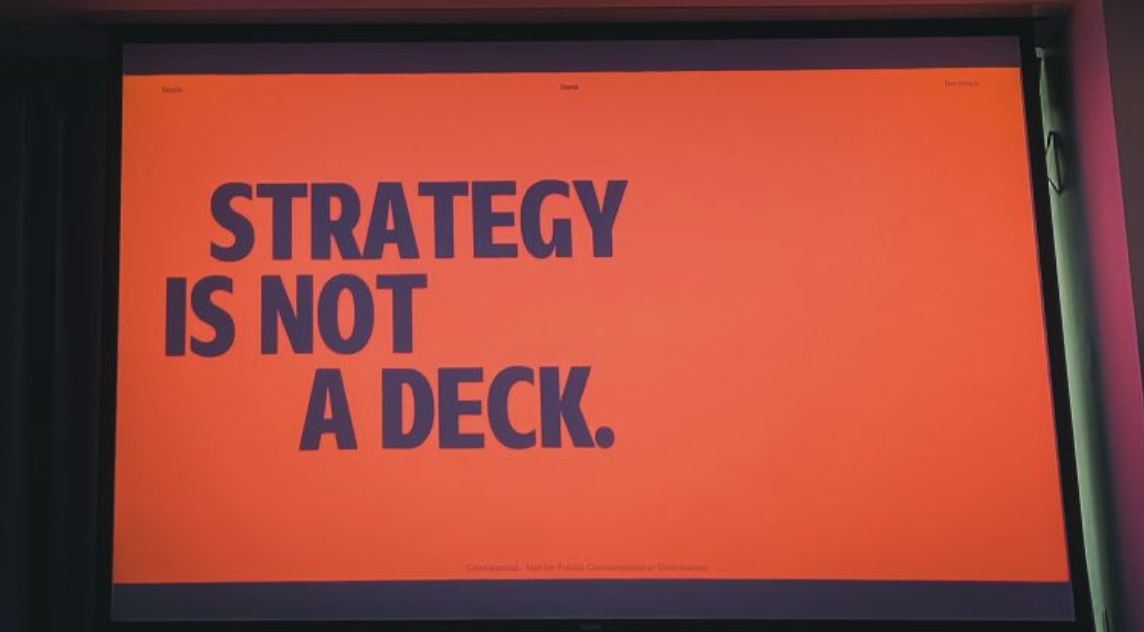
At StratFest, Tomas Gonsorcik, Global Chief Strategy Officer at DDB Worldwide and StratFest Co-Chair, emphasized that strategy must move beyond creating decks and toward delivering growth clarity. His B.E.R.N. model provided the roadmap:
- Business Within the Business - treat strategy as a commercial engine, not a service layer.
- Environment for Decisions - simplify complexity to accelerate creative and media choices.
- Right-Shaped Talent - blend creative empathy, data mastery, and financial fluency.
- Net Positive Outcomes - measure success by business impact, not output volume.
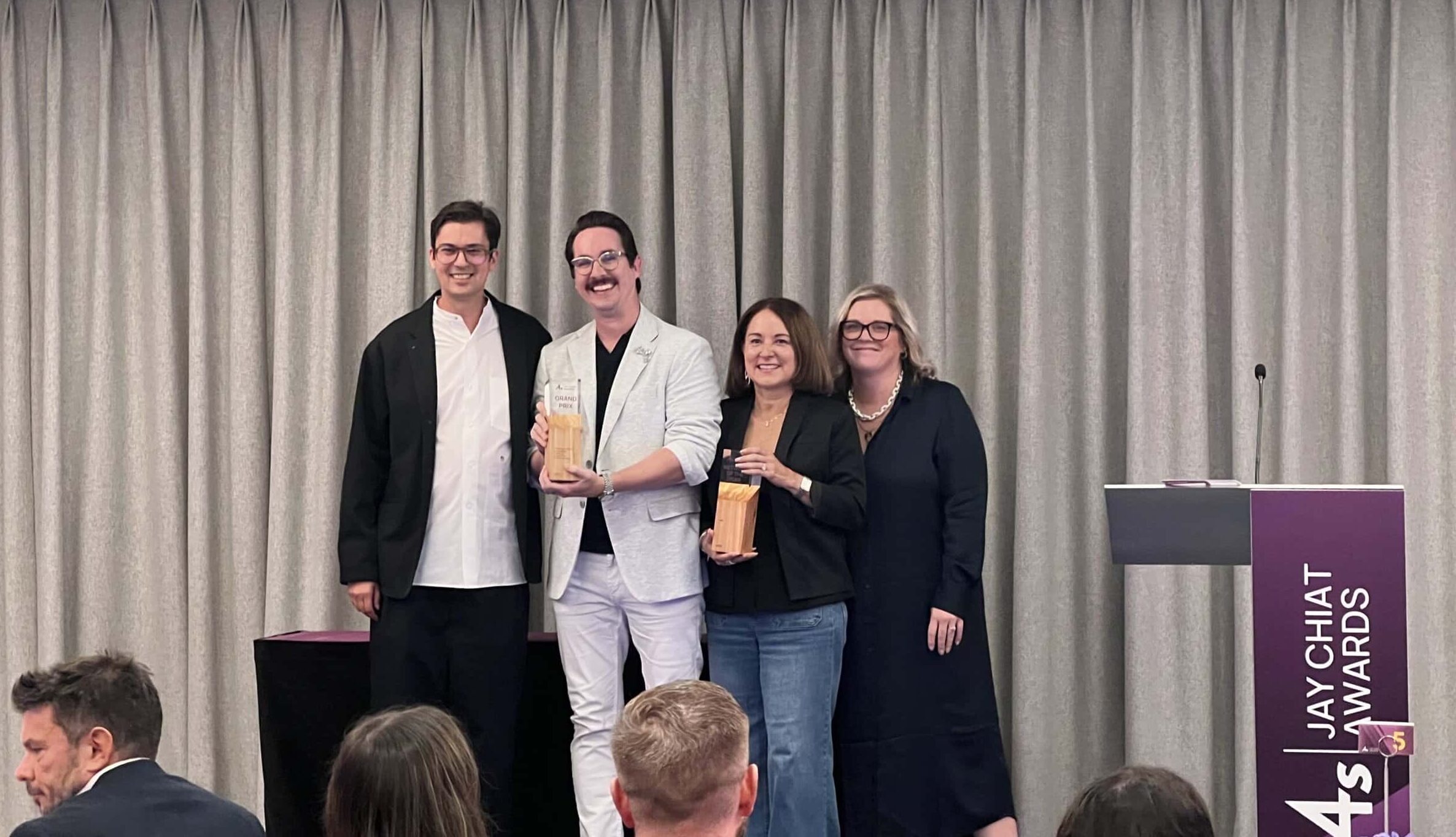
The Jay Chiat Awards 2025 set the tone the evening before the conference began. Justin Thomas-Copeland, CEO of the 4As, reflected on how this year’s winners raised the bar for boldness, imagination, and insight -- proving strategy’s power to make the improbable possible.
VML Belgium took home Grand Prix for Finding Julietteand VML won Network of the Year, showing that empathy-driven storytelling can fuel measurable growth.
Madison Giller (Arnold Worldwide) and Kate Rush Sheehy (GSD&M) were honored as Emerging and Visionary Strategists of the Year, representing a generation fluent in both the magic of narrative and the math of analytics.
Elizabeth Paul, Chief Brand Officer at The Martin Agency and StratFest Co-Chair, reminded attendees that the true measure of strategy is always profitably growth -- for clients, for brands, and for the craft itself.
Strategy is no longer a department. It’s a growth discipline.
Future-Proof Skills: From Thinkers to Builders
If growth is the why, capability is the how.
In “Don’t Die Adapting,” James Hurman -- Co-founder of Tracksuit and Program Director of the Master of Advertising Effectiveness -- reminded attendees that while tools and tactics change, the fundamentals of human decision-making stay constant. Emotional campaigns, he noted, deliver stronger long-term returns than rational ones.
Across sessions, a consistent pattern emerged: tomorrow’s strategist must shift from thinker to builder -- able to design systems that connect creativity, media, and business outcomes.
That evolution demands total-business literacy. Understanding margin pressure, market headwinds, and distribution levers is now as critical as decoding audience motivations and crafting quantifiable personas. The role of creative and media must intersect - creative strategists must grasp media and channel dynamics; media strategists must connect short-term performance to long-term brand equity.
Throughout the day, the concept of the hourglass team surfaced -- senior strategists providing clarity and commercial grounding at the top, with agile, AI-literate practitioners iterating and optimizing below. Strategy becomes a living, adaptive system that moves with the vagaries of the market and the discipline of critical thinking.
Tomorrow’s strategists won’t just interpret the market -- they’ll help shape it.
Embracing AI as the Ultimate Co-Pilot
Artificial intelligence has swiftly moved from novelty to necessity, and at StratFest, it became clear that AI has earned its seat at the strategy table -- as a co-pilot, not as the captain.
In “AI: The Next Great Shift,” Cori Moreno of Google explored how the acceleration of AI is transforming not just marketing tools but entire business models. Her message was pragmatic: leaders must harness AI to amplify creativity and efficiency without surrendering human intuition.
Later, in the fireside chat “The New Playbook: Agencies as Operating Systems,” Joe Maglio (Cheil Network) and Justin Thomas-Copeland (4A’s) argued that agencies must now operate like platforms -- fusing data, creativity, and technology to deliver always-on growth. In this new paradigm, humans serve as the intelligence layer that keeps technology impactful.
For media strategists, AI offers sharper precision in spend allocation and audience forecasting. For creative strategists, it opens new dimensions in storytelling and emotional mapping. But as several speakers warned, AI can accelerate insight -- yet only humans can assign meaning.
The Future Belongs to Those Who Dare
By the close of StratFest 2025, one truth resonated: strategy has evolved from a planning function into a performance engine -- the connective force driving business, brand, and behavior forward.
In “Strategy at the Speed of Life,” God-is Rivera, Chief Strategy Officer at Burrell Communications, called for frameworks that enable proactive, cross-functional decision-making -- preparing organizations to respond to culture in real time. Meanwhile, Hannah Schweitzer of TBWA\Chiat\Day, named Emerging Strategist of 2024, urged the industry toward “strategic subtraction” -- focusing less on volume and more on clarity, judgment, and creativity that cuts through complexity.
These conversations crystallized a new vision: creative and media strategists are no longer separate disciplines, but complementary forces. Together, they co-create growth. The strategist of tomorrow will think like a business architect, act like a builder, and lead with empathy, curiosity, and commercial acumen.
The future belongs to those who design the sky -- not those who just marvel at it
Photo at top: Elizabeth Paul, Chief Brand Officer at The Martin Agency and StratFest Co-Chair and Tomas Gonsorcik, Global Chief Strategy Officer at DDB Worldwideand StratFest Co-Chair, with Jay Chiat Award Winners -Source: 4As
Posted at MediaVillage through the Thought Leadership self-publishing platform.
Click the social buttons to share this story with colleagues and friends.
The opinions expressed here are the author's views and do not necessarily represent the views of MediaVillage.org/MyersBizNet.

Raquelle Zuzarte
Raquelle M. Zuzarte is an award-winning global marketing leader, who has led brand campaigns at Procter & Gamble, Johnson & Johnson, Accenture, Charter, Time Warner Cable and CBS. She also recently launched Equity Project For All…