
Creativity Unleashed: What Machines Can’t Replicate
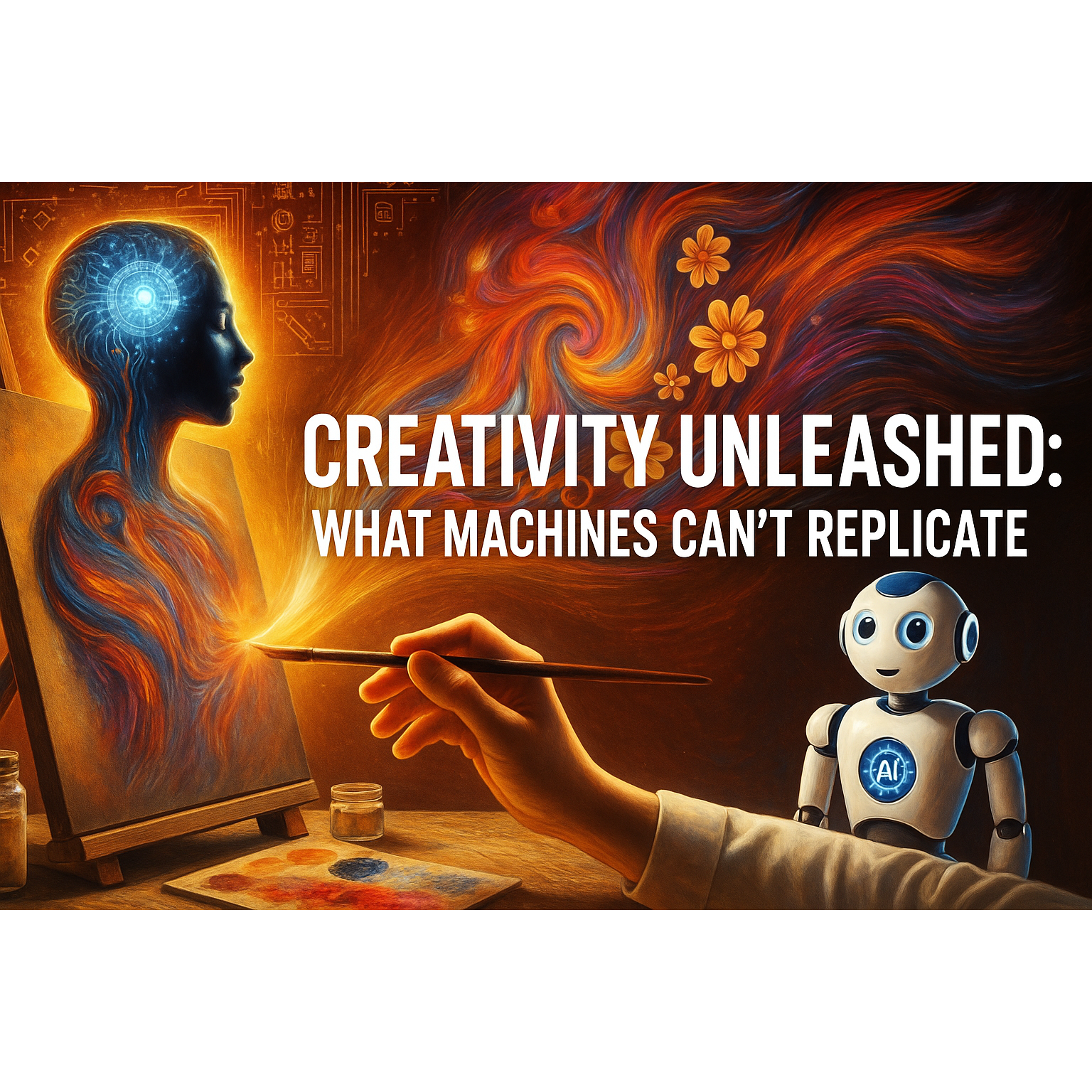
In Excerpt #5 from Jack Myers’ AI tutorial guidebook Creativity Unleashed: How AI Can Supercharge Your Ideas, we acknowledge that with all the potential AI brings to creativity, it’s only natural to feel a twinge of doubt. You might wonder: if AI can generate music, art, and stories, where does that leave us? Will our work be dismissed as derivative or unoriginal if we use AI as part of our process? Let’s take a moment to address these concerns by focusing on the qualities that make us irreplaceably human -- the aspects of creativity that no machine, no matter how advanced, can truly replicate.

The Irreplaceable Human Element in Creativity
AI is powerful, but it has boundaries -- especially when it comes to the very essence of human experience. Consider these uniquely human attributes that make creative work meaningful, resonant, and valuable:
Empathy and Emotional Connection
Art that resonates deeply often does so because it taps into universal emotions -- joy, sorrow, love, and fear. These emotions come from lived experience, from navigating life’s highs and lows. AI can process patterns in emotions, but it can’t feel them. It doesn’t know what it’s like to lose a loved one, celebrate a personal victory, or feel the warmth of a shared laugh. Your work gains its power from your personal insights, empathy, and understanding of emotions, which is something AI can only mimic at best.
Intuition and the ‘Gut Feeling’
Think of those moments when a creative idea just comes to you, seemingly from nowhere -- a flash of inspiration that feels like it came from a place deeper than logic. This intuitive spark is something AI can’t produce. AI operates within programmed parameters, based on the data it’s fed. It can’t have a “gut feeling” or take a leap of faith. When you have that instinctual pull to try something unconventional or make a bold creative choice, it’s an expression of your individuality and inner compass -- qualities that no algorithm can replicate.
Nuanced Understanding of Culture and Context
AI can analyze cultural trends, but it doesn’t live within a culture. It doesn’t understand the subtle layers of language, humor, and references that vary from place to place and generation to generation. These nuances make creative work relatable and relevant, and they require the sensitivity and awareness that only comes from being part of a culture. Your understanding of your audience’s context, background, and worldview gives you an advantage that AI simply can’t achieve.
Authenticity and Originality
At the heart of every meaningful work of art, literature, or design is authenticity -- a true expression of the creator’s unique perspective and voice. While AI can generate impressive outputs, these outputs are always a reflection of its training data, a blend of what it’s already been exposed to. It can’t invent a new genre out of nowhere or create something completely original. Human creativity, by contrast, is grounded in personal experience and often breaks free from existing frameworks, producing work that is fresh, unexpected, and profoundly authentic.
AI’s Limitations: Why Machines Can’t Replace Us
While AI might be advancing rapidly, it’s still limited by its design. AI can’t fully understand context or implications beyond what it’s trained on and prompted to deliver. It might process data and recognize patterns, but it doesn’t comprehend the meaning behind those patterns. This is why no AI can yet write a novel that delves into the human condition, create a poem that reflects cultural struggles, or paint an abstract piece that speaks to a generation’s fears and hopes. Those abilities come from the emotional and psychological complexity that, for now, only humans possess.
History shows that new technologies -- like the printing press, the camera, and the internet -- have always sparked fears that they might “replace” human talent. Yet, with each technological leap, humans have found ways to integrate these advancements, making them tools for expanding, not restricting, creativity. Instead of diminishing artistry, technology like the camera enhanced it, allowing painters to explore abstraction and new forms of visual storytelling, while photography itself became a unique art form. The internet didn’t replace storytelling; it opened up new platforms and ways for us to share our voices with a global audience.
We’re at a similar juncture with AI. Yes, AI will continue to evolve, and yes, it can generate some remarkable outputs. But it’s humans who choose how to use it. You might use AI to help you brainstorm, explore patterns, or streamline certain tasks, but it’s ultimately your perspective, emotions, and choices that give your work its impact. To create work that’s meaningful and powerful, remember that AI is a tool -- one that serves you. The more you infuse your own humanity, intuition, and vision into your creative process, the less likely your work will be dismissed as “just AI-generated.” Your professors, bosses, and audiences will recognize the authenticity in your work when they see a genuine reflection of your voice, perspective, and insight.

Jack Myers
With over five decades of experience in corporate leadership, B2B research, management insights, and technological trends, Jack Myers is a visionary leader and a trusted source for guidance and preparation as generative AI and machine intelligence dominates …