
Cross-Platform Engagement: Reaching Children Wherever They Are
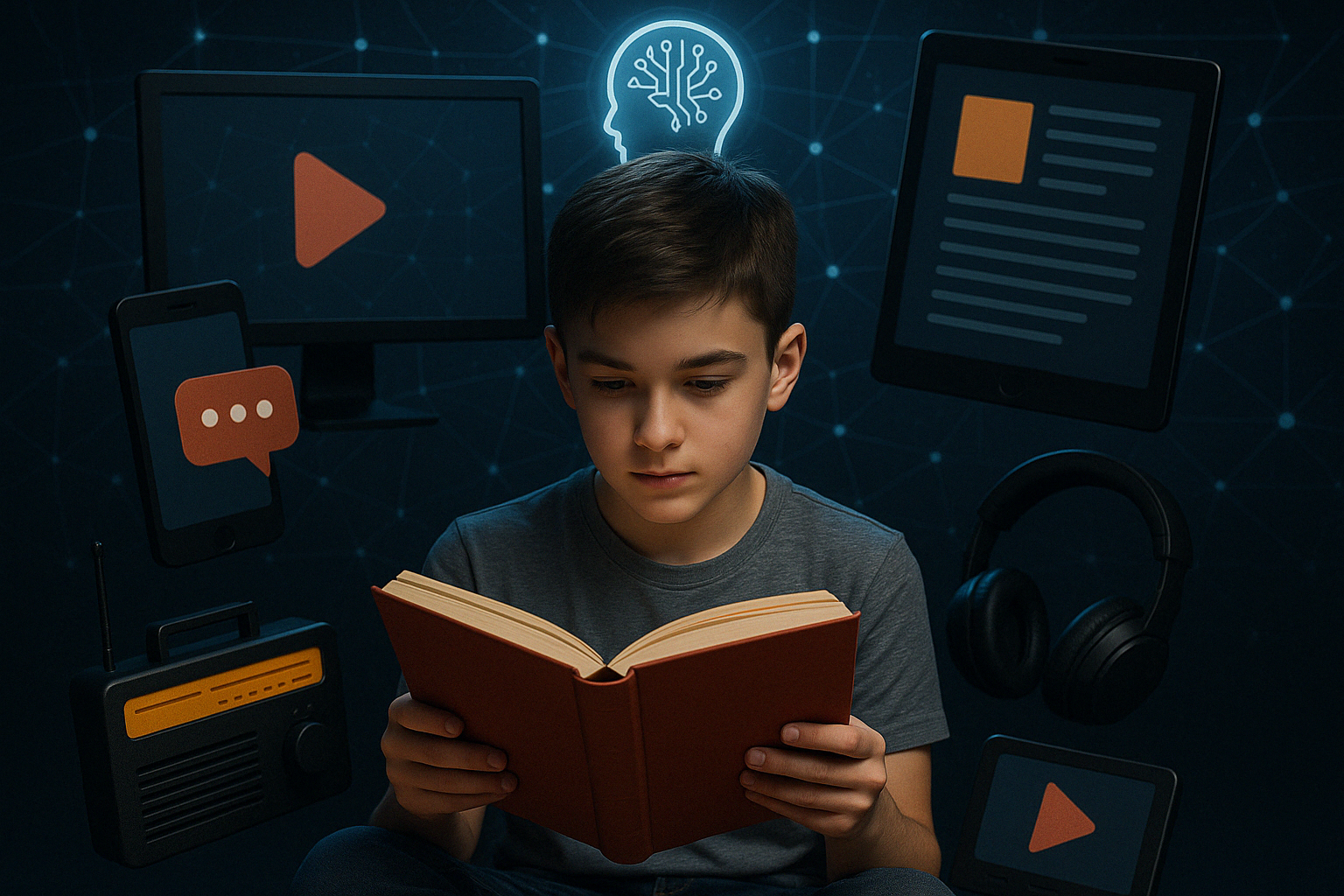
Children today are growing up in fluid, digital-first environments where content is dynamic, interactive, and omnipresent. From streaming services to mobile apps, gaming platforms to smart toys, young audiences move seamlessly across mediums. To truly connect with them, media creators must adopt a radically new mindset: content must be platform-agnostic, experience-rich, and context-aware.
Enter Doppol: the first-ever digital knowledge platform that leverages cutting-edge AI, digital twins, synthetic personas, and immersive digital experiences to personalize and deepen every child’s learning journey. Unlike traditional content delivery systems, Doppol links every experience back to books, enabling unprecedented insights into a child’s evolving interests, comprehension levels, and emotional engagement.
This is the 4th in a series; the previous articles were:
The Evolving Landscape of Children's Media: AI, Personalization, and Cross-Platform Engagement
- The Future of Kids’ Media: AI-Powered Personalization
- Quality Content and Educational Value: More than Just Entertainment
- Data Privacy and Ethical Considerations: Building Trust in a Digital World
Beyond Personalization: A New Era of Predictive Insight
In an era of AI-driven personalization, Doppol is pioneering something far more ambitious: predictive, emotionally intelligent learning journeys. Through the use of digital twins -- adaptive models that reflect a child’s current learning profile -- and synthetic personas built from massive datasets, Doppol doesn’t just recommend content. It anticipates what a child will be curious about next.
These personas allow Doppol to simulate responses, test engagement strategies, and generate highly tailored learning pathways before a child even logs in. It’s not just reactive -- it’s proactive, helping children discover ideas, genres, and narratives they may never have found otherwise.
The Book as a Gateway, Not an Endpoint
For the first time, a platform has embedded book-based learning into the heart of the digital content ecosystem. Doppol transforms every book into a gateway for deeper interaction: AI companions chat with children about what they’ve read, link characters and themes to other topics of interest, and even suggest personalized writing prompts or world-building activities.
Every touchpoint is tracked -- ethically and securely -- to build a rich analytical model of how a child is growing intellectually and emotionally. This includes comprehension scores, reading speed progression, curiosity metrics, and narrative exploration paths. Doppol provides not just raw data but meaningful insights that educators, parents, and developers can act on.
Cross-Platform, Context-Aware Learning
Doppol is designed to follow the child’s curiosity across platforms, adapting to the unique context of each moment -- whether they're curled up reading on a tablet, interacting with a story world in AR, or talking to their AI-powered reading companion before bed. It recognizes patterns across time and space, creating a living map of a child's knowledge and engagement.
The result is an ecosystem that doesn't compete with attention spans but aligns with them. It makes reading a central, coherent narrative in a child’s wider digital life.
Analytics With Purpose: Measuring What Matters
At the core of Doppol's innovation is its analytics engine, which goes far beyond clicks and time spent. It measures developmental relevance, emotional resonance, engagement intent, and learning absorption. It can predict which stories will challenge a child just enough, which characters they’ll connect with, and when to shift mediums to maintain momentum.
These insights aren’t abstract—they’re actionable. They inform everything from content development to user experience design and educational support, enabling the creation of content ecosystems that evolve with the learner.
The Future of Children’s Media Is Here
Cross-platform engagement is no longer a trend -- it is the standard. But Doppol shows what happens when that engagement is rooted not just in entertainment, but in depth, continuity, and emotional intelligence.
This is not just a new way to deliver stories. It’s a new way for children to grow, learn, and explore their place in the world -- powered by digital twins, synthetic personas, and the enduring magic of books.
To learn more, visitwww.doppol.com.
The next article in the series will be:
Parental Controls and Co-Viewing Experiences: Empowering Families
Platforms are offering robust parental controls to manage screen time, set content filters, and track viewing history. Co-viewing features encourage families to watch together, with interactive elements like on-screen quizzes and discussion prompts that enrich the shared experience.
Posted at MediaVillage through the Thought Leadership self-publishing platform.
Click the social buttons to share this story with colleagues and friends.
The opinions expressed here are the author's views and do not necessarily represent the views of MediaVillage.org/MyersBizNet.
Nick Hencher
Nick Hencher is Managing Partner at Contexxt.com and the co-founder of Doppol.com, an innovative platform harnessing AI to transform media and content. With a career spanning media, AI, and intelligent software solutions, Nick has led groundbreaking initiati…