
"Hacks" Delivered One of TV's Best Finales While "Euphoria" Left Fans Divided
Prestige television rarely gets to choose how it's remembered. Some shows burn brightly and leave audiences wanting more while others overstay their welcome. A select few manage to deliver a final chapter that reinforces everything that made them special in the first place.
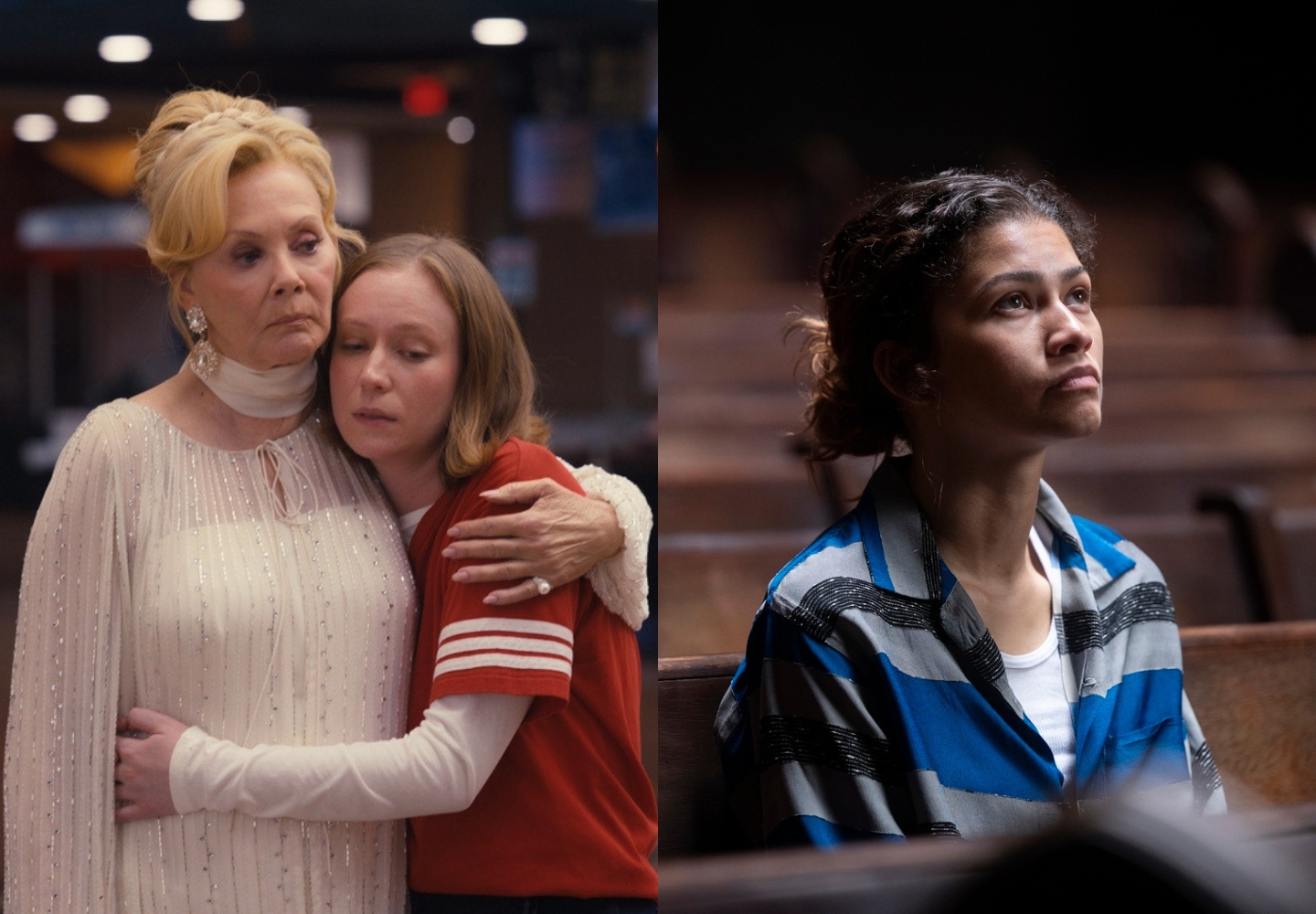
This year, two of HBO and HBO Max's most acclaimed Emmy-winning dramas reached the finish line. One crossed it triumphantly and the other stumbled there bruised, battered and seemingly unsure of how it got there.
After five seasons, Hacks concluded its remarkable run on HBO Max with the same sharp wit, emotional intelligence and character-driven storytelling that made it one of television's most consistent comedies. Meanwhile, Euphoria wrapped up its long-awaited third and final season on HBO after a seven-year journey that often felt disconnected from the show that audiences originally fell in love with.
On paper, both series were massive successes. Hacks has earned consistently rave reviews and 12 Emmy Awards, including four wins for star Jean Smart and a supporting actress victory for Hannah Einbinder. Euphoria exits with nine Emmy wins, highlighted by two victories for Zendaya's powerful and vulnerable lead performance. Note, they’re likely to earn more for their final seasons at the Emmys this fall.
Yet by the time their finales aired, one series felt completely in command of its identity while the other seemed to have lost sight of its own.
What makes the ending of Hacks so impressive is that it never felt like a show desperately trying to wrap everything up. Final seasons often become consumed with nostalgia, callbacks and farewell tours. Instead, Hacks remained focused on what it had always done best: exploring the complicated, often messy relationship between Deborah Vance and Ava Daniels.
The series never sacrificed character for sentimentality. It remained as sharp, witty and laugh-out-loud funny as ever while still delivering some of its most emotionally devastating moments. The writers clearly understood that closure doesn't require tying every loose end into a neat little bow. It requires giving characters believable futures with which we can drum up our own headcanons as we wonder “where are they now?”
Deborah and Ava's relationship reached new emotional heights during the final season, allowing both Smart and Einbinder to deliver some of the strongest work of their careers. Smart remained a master class in comic timing and dramatic vulnerability, but it was Einbinder who arguably benefited most from the show's conclusion. Ava's growth over five seasons felt earned, messy and authentic, culminating in a performance that demonstrated just how much the character and the actress had evolved since the series premiered. It’s especially impressive when you realize this was Einbeinder’s first ever acting role.
More importantly, every major character received a satisfying sendoff without feeling artificially packaged for audience approval. The finale respected both its characters and its viewers.
The same cannot be said for Euphoria.
From its opening moments, the third season felt like a completely different show. The decision to implement a significant time jump moved the characters beyond high school and, in some cases, beyond college entirely. In theory, this should have allowed the series to explore how youthful mistakes and addictions follow people into adulthood.
Instead, it often felt as though the show skipped over the very stories audiences had invested in for two seasons.
Compounding the problem was the absence of nearly half the principal cast. Whether due to scheduling conflicts, creative decisions or other circumstances, numerous familiar faces simply disappeared. Their departures left major storylines unresolved and emotional arcs abandoned.
The result was a season filled with narrative gaps that became increasingly difficult to ignore.
To be fair, Euphoria still knew how to create tension. The season featured several expertly staged sequences and emotional confrontations that showcased the production's undeniable technical strengths. Few television series can match its visual ambition or ability to generate anticipation for a major set piece. But tension without payoff eventually becomes exhausting.
No character illustrates that frustration better than Cassie. Sydney Sweeney remains one of the most sought-after performers of her generation, yet she spends much of the season attempting to elevate material that frequently borders on the absurd. Her commitment never wavers, but there is only so much an actor can do when the writing itself loses credibility.
Then there's Nate Jacobs. Watching Jacob Elordi's final season often felt less like Euphoria and more like a particularly gruesome sequel to Saw. The character endures an escalating series of physical traumas that become increasingly difficult to take seriously. By the time his story reaches its brutal conclusion, shock has largely replaced substance.
Ironically, the one character whose journey feels complete is Rue. Zendaya delivers another outstanding performance, guiding Rue through an arc that is heartbreaking, tragic and ultimately consistent with the themes that have defined the series from the beginning. Euphoria was never intended to be an uplifting story. It has always been about addiction, self-destruction and the collateral damage left behind when people lose control of their lives.
Rue's ending embraces that reality. The problem is that much of the surrounding narrative does not. Perhaps the most revealing difference between these two finales lies in how the shows were made.
Hacks delivered five seasons over six years. While production faced challenges, including Jean Smart's recovery from heart surgery and delays caused by the 2023 WGA and SAG-AFTRA strikes, the creative team consistently maintained a clear vision for the series. Every season built naturally upon the one before it.
Euphoria, by comparison, produced three seasons across seven years. Some delays were unavoidable, including the COVID-19 pandemic and the aformentioned labor strikes. But time alone cannot explain the creative disconnect that emerged between seasons. The extended gaps only amplified expectations that the final season ultimately struggled to meet.
Great television doesn't simply require talent. It requires clear direction. By the end of Euphoria, it felt as though the show had become distracted by its own mythology. The performances remained strong. The production values remained impressive. But somewhere along the way, the storytelling lost its focus.
Hacks’ finale celebrated everything that made its series special. Euphoria served as a reminder that even the most acclaimed shows can lose the plot. Literally.
Hacks and Euphoria are available to stream in their entirety on HBO Max.

Juan Ayala
Juan Ayala is a Brooklyn-based entertainment journalist, podcast producer and host and serves as MediaVillage's Director of Content Management. In 2020, he launched his first podcast Actors With Issues, a "self-help podcast for actors, by actors&quo…