
Here’s What’s Happening IRL: Six Top Trends for 2025’s Second Half

Here’s a massive understatement: a lot has happened this year.
With questions flying fast and furious about everything from tariffs rising to travel falling, wouldn’t it be nice to have a few answers?
Well, here’s some good news. OUTFRONT has you covered.
Our Advertising Trends Report is all new with fresh insights for the second half of 2025, a toolkit for navigating the changing worlds of consumers, advertising media at large, and IRL out of home advertising specifically. It’s over 50 pages of essential information and you can download the full report for free now at OUTFRONT.com.
But if you’d like a sneak preview, here are six of the most important trends that brand marketers, agencies, and media buyers need to know as we head into the home stretch of the year.
Authenticity and trust play a significant role in consumers’ relationships with brands.
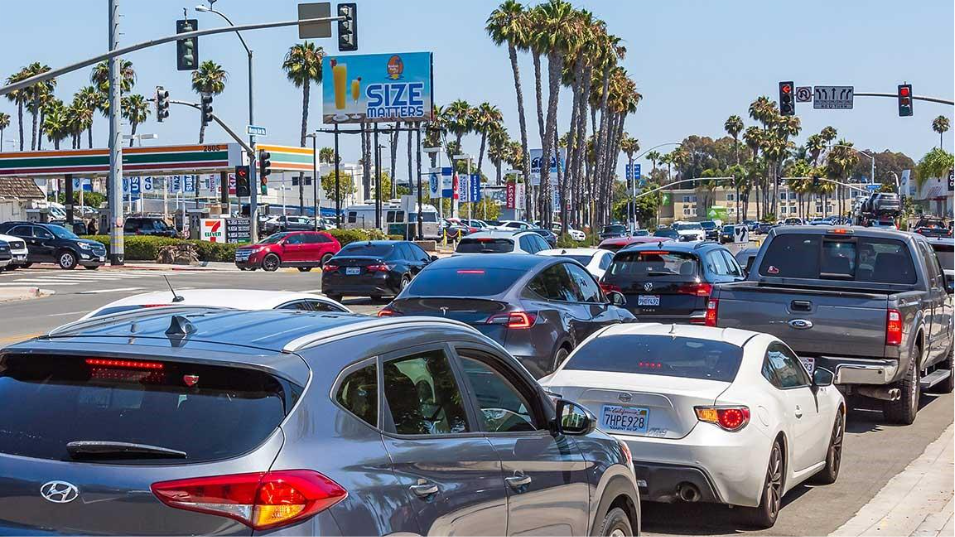
Alt: Poster billboard in San Diego for the Broken Yolk Café with the copy line “size matters”
As the online environment becomes more and more polluted with AI slop, bots, fraudulent reviews, and deepfakes, authenticity has become more critical than ever, with 98% of consumers saying that it’s important and nearly six in ten saying it’s very or extremely important. It’s the top-ranked factor in building brand trust (SOURCE: Atom Radar). And brand trust is ranked equally with quality and price for driving product consideration (SOURCE: Edelman). As for what authenticity looks like in practice, consistent quality and honest communication top the list for 56% and 43%, respectively (SOURCE: Atom Radar).
Consumers seek out brands whose values match their own, and they want those brands to take a stand.
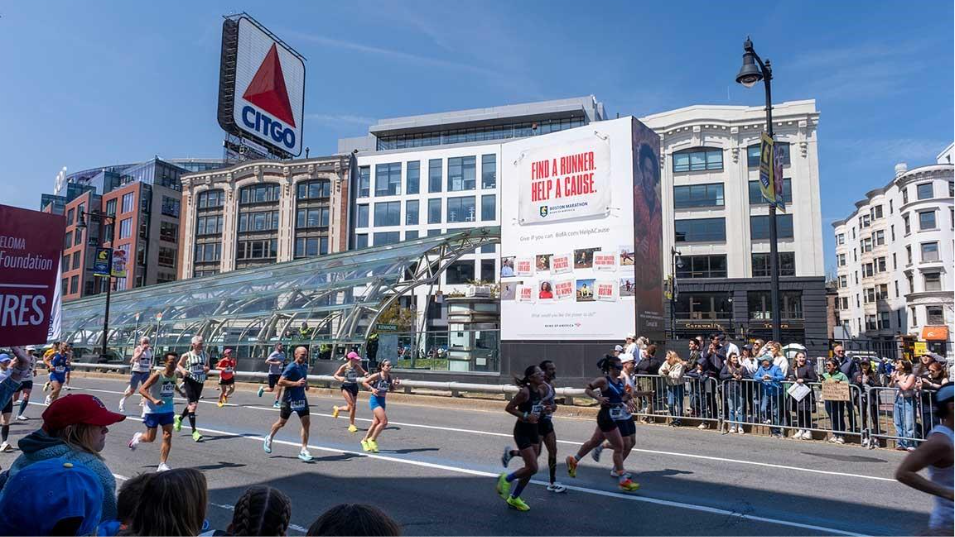
Alt: Bank of America Boston Marathon advertising on Kenmore Elevator
In an era where every purchase has seemingly become a political act, consumers demand that brands stand for something bigger than themselves. 88% of consumers strive to support brands that share their values; when consumers share values with a brand, 84% will recommend the brand, 55% say they’re more loyal because of those shared values, and 64% will even pay a premium for that alignment (SOURCE: GWI/Givsly).
But brands that adopt values inauthentically should beware - because taking a stand and backing down from it can be orders of magnitude worse for a brand than staying quietly above the fray, which poses threats of its own – 53% feel disappointed when brands remain neutral on important issues, and the same number interpret a brand’s silence as either doing nothing or worse, hiding something (SOURCE: Edelman).
Trust is even more important than in years past because the stakes are now higher.
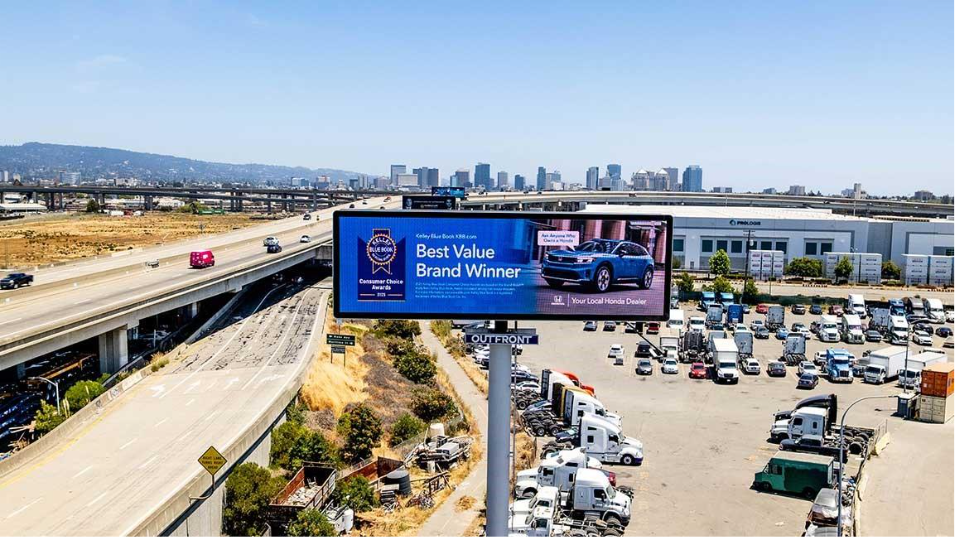
Alt: Digital billboard for Norcal Honda
In the C-suite, two out of three recognize that trust is more important than previously. The biggest reasons are that more of our personal information is at risk (62%) and human interaction is harder to come by (51%) (SOURCE: Institute of Practitioners in Advertising/Financial Times).
But a trustful relationship benefits everyone. Consumers can feel more confident and less concerned about their dealings with a company, while brands benefit from improvements to loyalty, brand equity, profits, and resiliency.
Brands can bolster their trust by advertising exclusively on “gatekeeper” channels –mediums where only curated, professionally produced content is shown, such as out of home – as opposed to channels with user-generated content, such as X (formerly Twitter). This is critically important - 59% of decision-makers say gatekeeper media is important or very important for building trust, and consumers consider gatekeepers more trustworthy by a 50-point margin (SOURCE: IPA/FT).
Media buyers are rethinking their emphasis on short-term performance marketing as they recognize the long-term dividends paid by investment in brand.

Alt: Nike wallscape on Hotel Figueroa in downtown Los Angeles
The performance vs. brand debate rages on – but should it? 84% of the time, a buyer’s journey ends where it began - with the brand they expected to buy in the first place, which means that if you’re introducing your brand to new buyers when they’re actively looking to buy, you’re already too late (SOURCE: Saïd Business School, Oxford University).
Ultimately, chasing short-term objectives like impressions, social engagement, and conversion rates comes at the expense of brand effects like awareness, trust, differentiation, and distinctiveness. And the latter contributes much more to business results like market share, loyalty, and profit. In fact, over the long term, the campaigns in the top quartile of brand impact achieve nearly 50% more of those business results than the bottom quartile (SOURCE: System1). By entertaining and creating emotional resonance, brands can establish themselves for consideration before the buyer starts their search.
IRL out of home media is more trusted than all online formats.
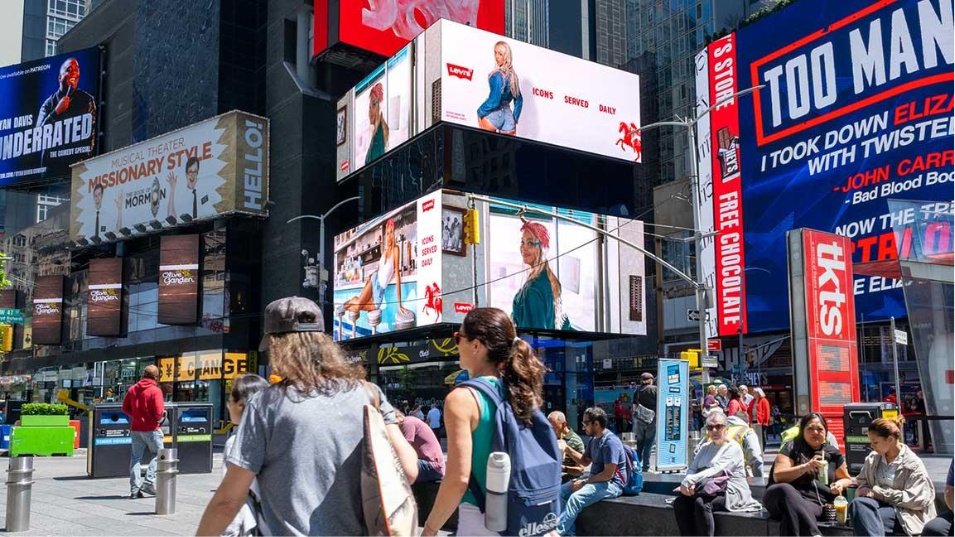
Alt: Levi’s DOOH advertisement on The Cube at 2 Times Square
OUTFRONT recently partnered with MFour to study consumers’ attitudes on trust in media, and the results confirmed what we already knew: IRL out of home advertising is more trusted than every single online format. Consumers rank OOH most trusted, most honest/authentic, and “most likely to be believed” more frequently than any digital channel (SOURCE: MFour/OUTFRONT). And when we asked consumers about straight-up preference, the results remained the same.
Out of home’s physical presence translating into greater trust makes perfect sense. After all, there’s no driving past a deepfake.
The trustworthiness of IRL out of home media creates a “halo effect” for the brands that advertise on it.
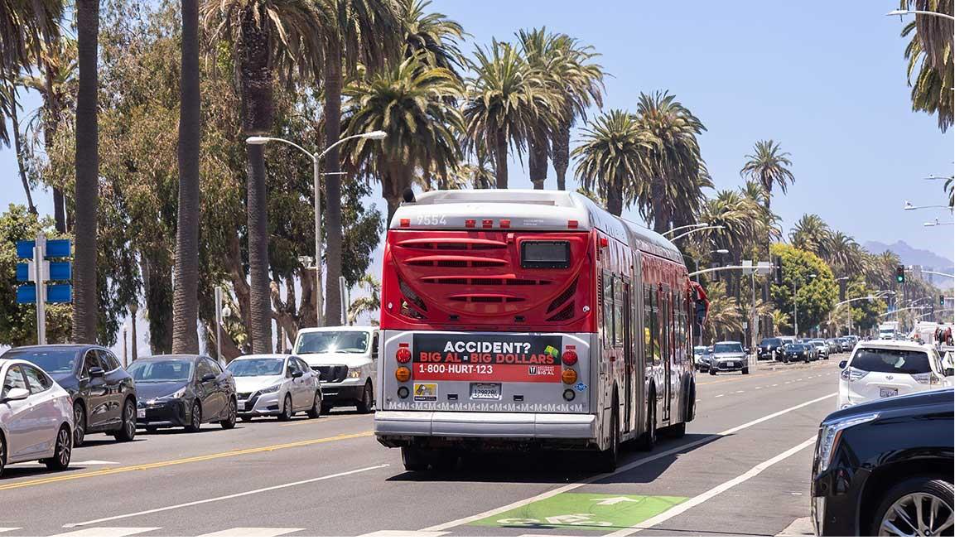
Alt: Bus advertisement for Big Al attorney in Los Angeles
Brand safety risks have been at the front of media buyers’ minds for the past few years, but there’s been little talk about the flipside until now. That flipside is called the halo effect, and here’s what it means: consumers are more likely to trust a brand that advertises in a trusted media environment. Sixty percent of them, in fact (SOURCE: Institute of Practitioners in Advertising/Financial Times).
What determines whether or not consumers trust a medium? The big variable is gatekeeping - limiting content on the channel to the curated, professionally produced variety. Gatekeeping platforms like newspapers and OOH are a stark contrast to user-generated content platforms like TikTok and X (f/k/a Twitter) where anyone can post anything at any time.
There’s a significant trust gap between gatekeeping and non-gatekeeping platforms: when advertised on gatekeeper media, consumers trust brands to deliver on their promise 37% of the time. For non-gatekeepers, that number plummets to just 5% (SOURCE: IPA/FT).
These six trends are just the beginning of the actionable insights you’ll find in OUTFRONT’s Late 2025 Advertising Trends Report. Want the rest? Download the full report for free right now!
Posted at MediaVillage through the Thought Leadership self-publishing platform.
Click the social buttons to share this story with colleagues and friends.
The opinions expressed here are the author's views and do not necessarily represent the views of MediaVillage.org/MyersBizNet.

Jay Fenster
Jay Fenster currently serves as OUTFRONT’s Marketing Manager. Jay joined OUTFRONT, the advertising business, and New York City in 2021 after thirteen years in Las Vegas working in the casino gaming industry. While living in Sin City, Jay built a region…