
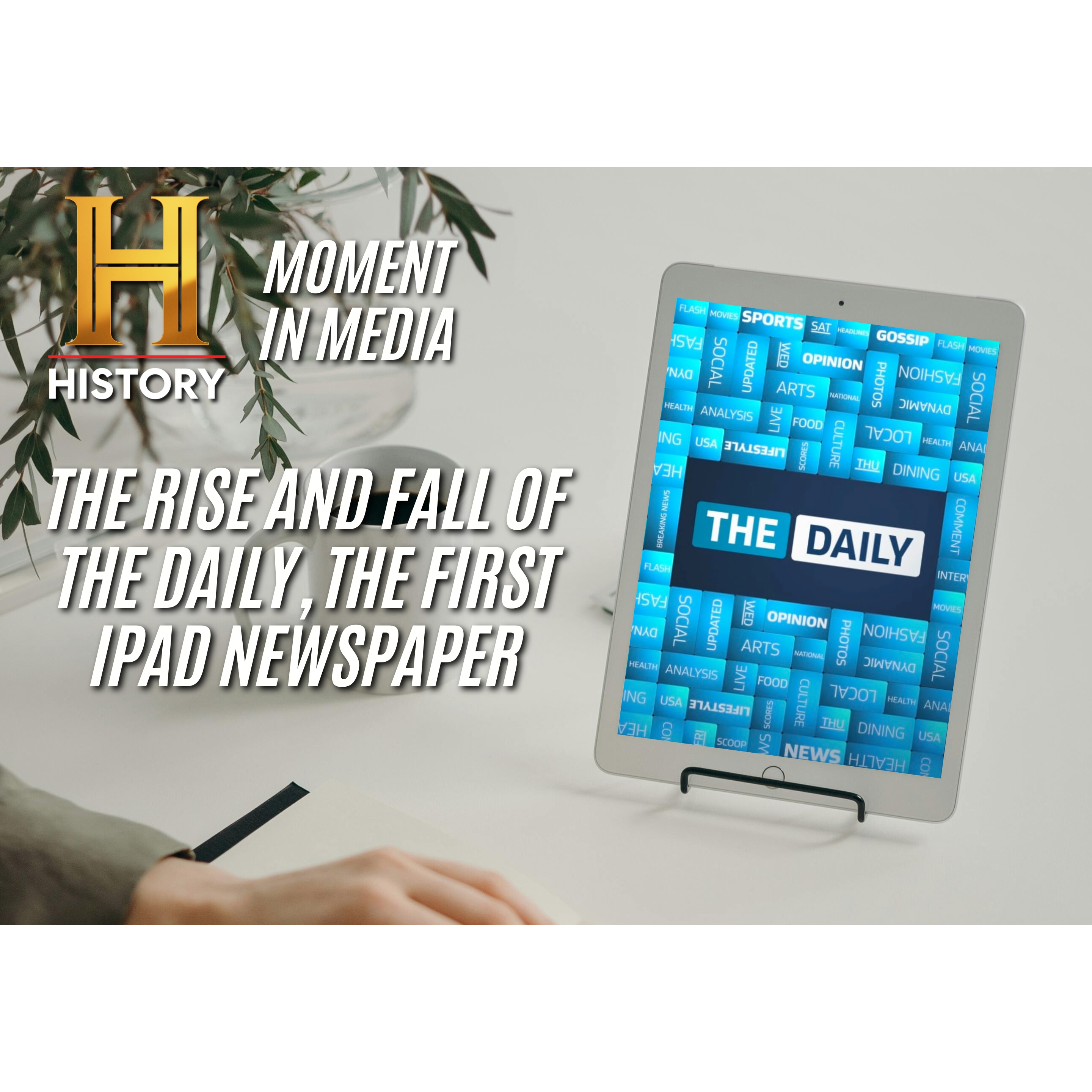
HISTORY’s Moment in Media: The Rise and Fall of The Daily, the First iPad Newspaper
Standing onstage at the Guggenheim Museum in New York City and accompanied by top Apple exec Eddy Cue -- Steve Jobs had promised to be there, but he’d recently taken medical leave from the company -- Rupert Murdoch unveiled what he called the future of the news business. “New times demand new journalism,” he announced.
It was February 2, 2011 -- 14 years ago this month -- and Murdoch’s News Corporation was launching The Daily, the world’s first-ever iPad newspaper.
Apple had introduced the iPad barely a year earlier, but the challenges the digital era brought to the business of news were much older. Since the dawn of the consumer internet era, in the mid-1990s, the ad-based business model that had long underpinned newspaper publishing had been collapsing. Worse, it was generally seen as near-impossible to get people to pay for things they navigated on the web. But Apple’s iTunes Store, which opened in 2003, had created a new model, one in which users could seamlessly and easily pay for media they downloaded to their own devices.
That seamless payments system, combined with the ease and elegance offered by the iPad, suggested to Murdoch, always a newspaperman at heart, a route to reinventing the newspaper for the digital age.
He went all in.
On Fox Business, Murdoch called The Daily his “No. 1 most exciting project.” His son James, then a senior News Corp. leader, called it “our flagship project.” Rather than simply repurposing content from existing News Corp. outlets like the New York Post, The Wall Street Journal or Fox News, The Daily was purpose-built from the ground up by what was reported to be a team of more than 100 people and with a budget of $30 million. Designed to be a mass-market, general interest newspaper, it had bureaus only in New York and Los Angeles and relied on freelancers elsewhere. Murdoch and company recruited some top talent for the team, including a music critic from The New Yorker and Richard Johnson, the long-term gossip kingpin of the Post’s Page Six.
Murdoch’s belief -- or hope -- was that without paying for big, expensive printing presses and the physical distribution of newspapers, he could make enough money via recurring payments at the iTunes Store to make this new publication profitable. In the classic newspaper model, the introductory subscription price was set low to encourage readership -- 99 cents a week, or $40 per year, after an initial free two weeks sponsored by Verizon -- and advertisers including HBO, Virgin Atlantic and Range Rover enlisted to reach those readers.
The Daily was a highly designed, polished app that really did look and feel like something new -- or at least something a lot different from a typical newspaper website. Many commentators said that it felt more like a magazine than a newspaper, with its bold photography and embedded video. But one thing may have felt awkward for a digital publication: True to its newspaper roots, it was published every morning and not typically updated throughout the day.
Reports were that Murdoch hoped to reach 500,000 subscribers over five years. At the time of the launch, only 15 million iPads had been sold worldwide. (The Daily was in English and available only to a U.S. audience.) At the one-year mark, February 2012, the number of subscriptions for The Daily was reported to be 100,000. Several months later, in July, it was reportedly “on watch.”
That December, with still just 100,000 subscribers and losing tens of millions of dollars annually, New Corp. shut down The Daily.
Ironically, in March 2011, just a month after The Daily’s launch, The New York Times for the first time implemented a paywall on its website, a move that eventually led that legacy news organization to become the world’s most successful digital newspaper.
Posted at MediaVillage through the Thought Leadership self-publishing platform.
Click the social buttons to share this story with colleagues and friends.
The opinions expressed here are the author's views and do not necessarily represent the views of MediaVillage.org/MyersBizNet.