
How AI Is Flipping the Script on Discovery, Identity, and the Future of Entertainment
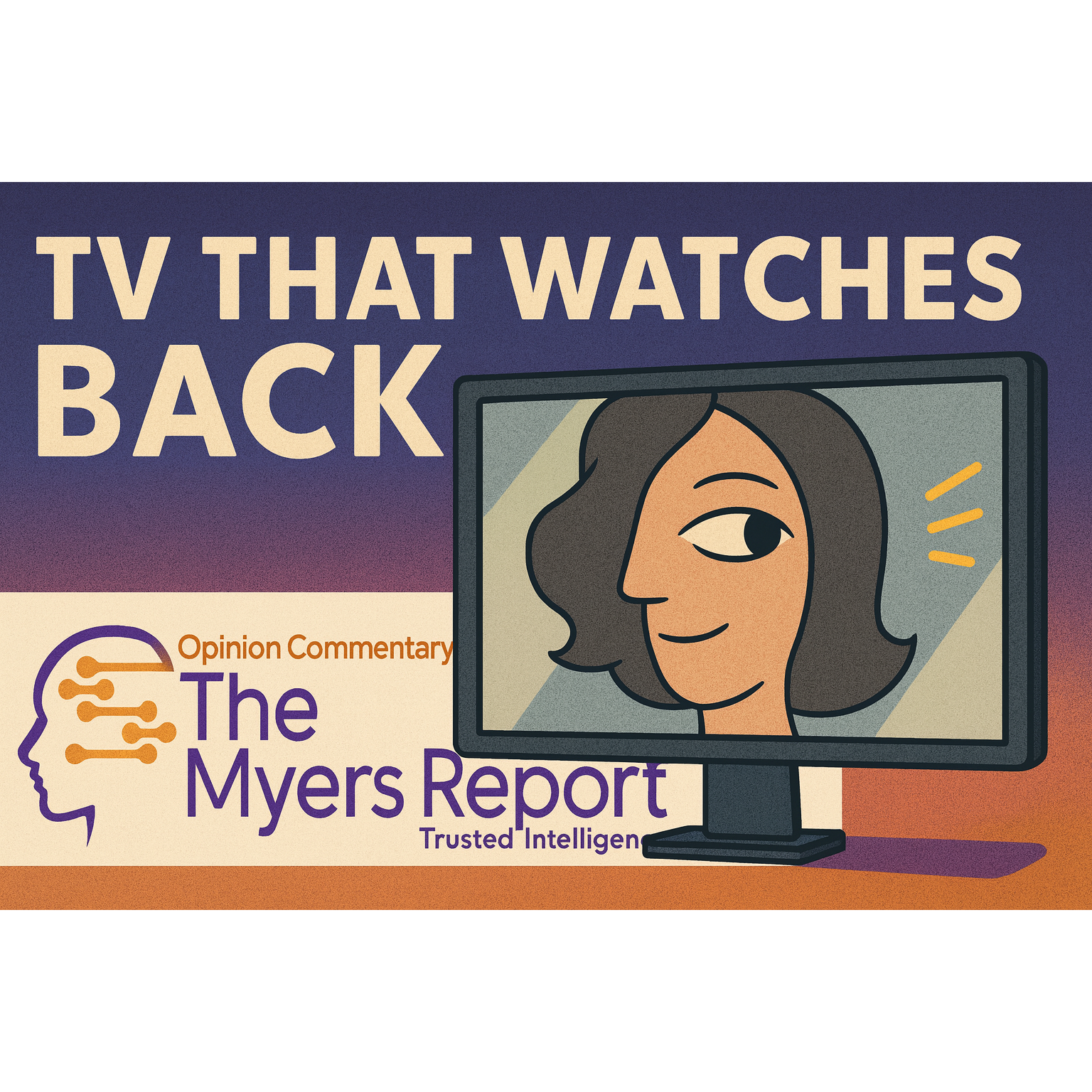
Advertisers who fail to rethink their role as emotional co-creators will get left behind.

We’re standing on the edge of the most radical reinvention of television since the arrival of cable. And it’s not being driven by networks, streamers, or advertisers. It’s being driven by AI that generates, adapts, and ultimately watches us back. I’ve spent four decades tracking seismic shifts in media, and I don’t say this lightly:the viewing experience is becoming a mirror.
With the launch of platforms like Showrunner, the Amazon-backed AI-powered system from Fable Studios, television is no longer just made for us. It’s made with us. And soon, it will be made about us.
The End of Passive Viewing
For more than a century, the television model has been one-directional: create a show, distribute it, sell advertising around it, and hope it finds an audience. Recommendation engines added a layer of personalization, but discovery has remained largely static, limited to rows of thumbnails and stale metadata.
That era is over.
Generative video AI transforms television into something fluid, responsive, and potentially participatory. Showrunner allows anyone to create an episode complete with script, animation, voiceover, and editing by typing a prompt or uploading a selfie. One moment you’re a viewer; the next, you’re the protagonist. You don’t just watch the show. You are the show.
And while today’s outputs are simplistic and episodic, the trajectory is unmistakable. AI doesn’t plateau; it accelerates. In two to three years, narrative depth and emotional fluency will be sophisticated enough that personalized storylines will rival traditional serialized arcs. At that point, AI isn’t just augmenting content, it’s redefining it.
Discovery That Discovers You
Here’s where it gets even more consequential. In the AI-powered future, you won’t search for content -- content will search for you.
Imagine an environment where television doesn’t just recommend a show. It builds one in response to your mood, history, and even biometric signals. Your “home screen” becomes a narrative engine trained on your curiosity, your fears, your longings. We move from recommendation to co-authorship. From curation to co-intelligence.
This future isn’t distant. It’s a logical extension of today’s models of predictive content, emotional AI, and identity-driven media. Combine it with the creative sandbox offered by generative platforms, and what we’re talking about is not television. It’s a programmable emotional experience.
What It Means for Advertisers and Media Leaders
Let’s be honest: the media industry is not ready for this.
We are still measuring reach in 30-second spots. Still optimizing for CPMs in a world where attention is now measured in blinks, micro-moods, and rewatches of AI-generated in-jokes. Showrunner might seem like a novelty today - a sandbox for animation fans and satirical meme-makers. But remember, TikTok started as a lip-sync app.
The implications for advertisers are profound:
- Context collapses. There’s no standard ad break when every story is a one-off.
- Attention fragments. Viewers jump between remixable narratives with no central canon.
- Brand storytelling evolves. Traditional placement won’t cut it -- brands must now live inside the narrative engine.
Advertisers who fail to rethink their role as emotional co-creators will get left behind.
And for IP holders and studios, the threat -- and opportunity -- is even bigger. Fan-generated episodes are no longer speculative. They’re monetizable. Platforms like Showrunner are already offering 40% rev-share to users whose content gets reused or remixed. The entertainment economy is tilting toward participatory licensing, a market built not on protecting canon but enabling fan fiction at scale.
The Mirror That Talks Back
In my upcoming book Your Third Brain, I write about the emergence of co-intelligence, a convergence of human creativity, machine logic, and distributed culture. The future of media is not just AI-generated content. It’s AI that learns from our interactions and reshapes itself in response.
We are approaching the moment when your television experience will be as unique as your fingerprint.
When the viewer profile is not a demographic segment -- but an evolving neural template.
When entertainment isn’t consumed -- it’s reflected.
This changes everything. The ethical stakes. The economics. The entire creative process.
We must ask: Who owns the story if it’s based on you? Who is the writer when no one writes? How do we sustain a culture where the story is always changing?
These aren’t hypotheticals. They are the new media realities. And we have to lead through them -- not follow.
The Takeaway: From Programming to Becoming
TV that watches back is not about surveillance. It’s about co-creation. It’s about a medium that reflects the complexity of who we are and who we are becoming.
If media and advertising leaders want to stay relevant, the challenge is clear: stop thinking like programmers. Start thinking like ecosystem designers.
Because in the next era of television, discovery isn’t just about what we find; it’s about what finds us.
And the future will be watching.

Jack Myers
With over five decades of experience in corporate leadership, B2B research, management insights, and technological trends, Jack Myers is a visionary leader and a trusted source for guidance and preparation as generative AI and machine intelligence dominates …