
‘Furious’ Review: Hulu's Revenge Thriller Finds Power in the Messy Morality
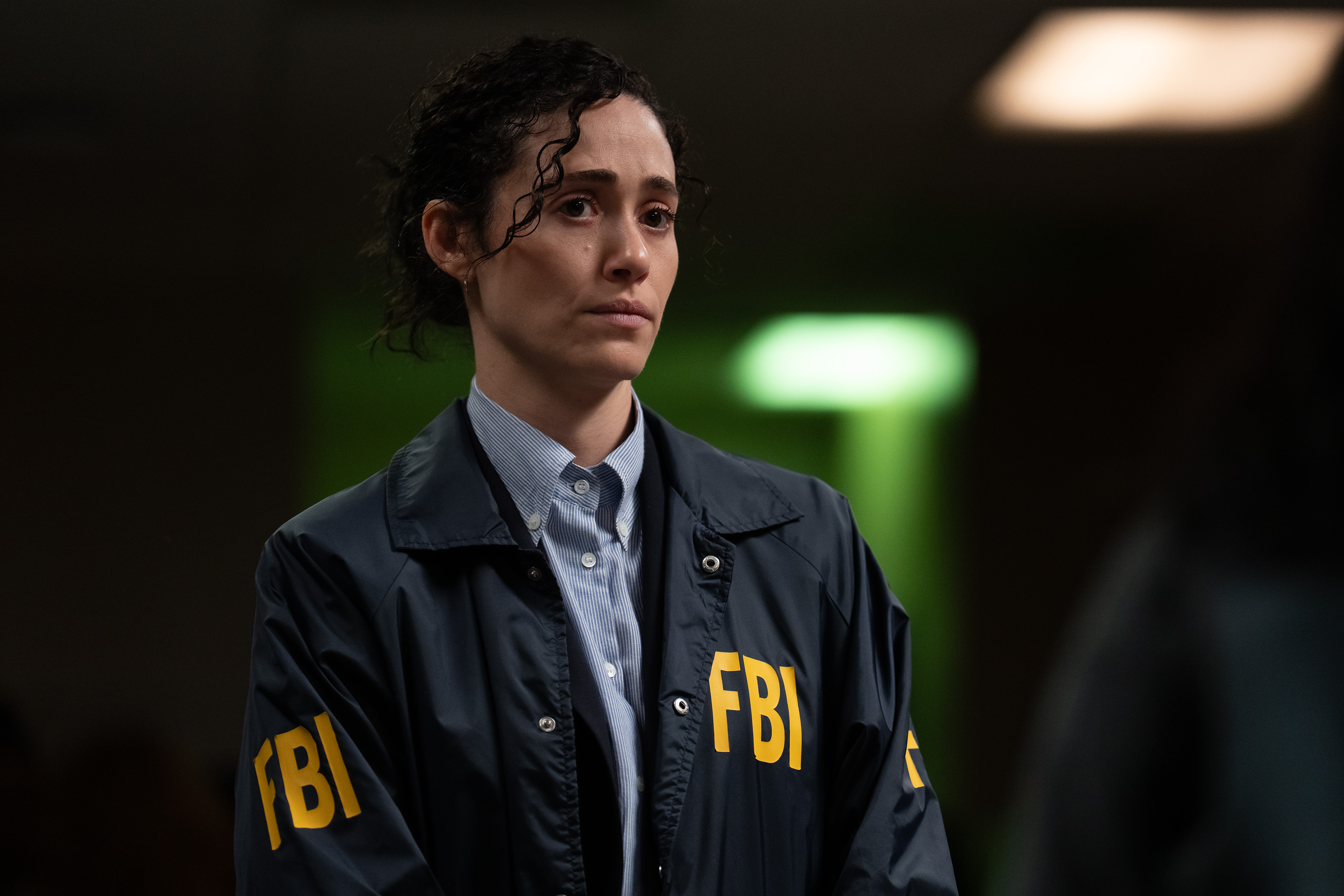
There is something immediately familiar about Furious. A female federal agent hunting a serial killer? We’ve seen versions of this story before, from The Silence of the Lambs to Killing Eve. But familiarity is hardly the point of Elizabeth Meriwether’s new Hulu series. While Furious is inspired by the 1987 thriller Black Widow, Meriwether quickly moves beyond the premise that inspired it, creating something considerably more complicated, emotionally messy and, at times, a bit amusing.
At the center is Emmy Rossum as FBI Agent Alice Black who gets a call from her old buddy Detective Danny Kelly for her help in what is staged as an overdose, but is really a homicide. Things get complicated when Alice’s abusive ex Marshall, an NYPD detective, joins the task force and the investigation leads to Catherine (Lola Petticrew) who has accumulated an impressive collection of names, identities and disguises while systematically targeting wealthy and powerful men.
At first, Catherine seems like the sort of seductive, hyper-competent killer that television has trained audiences to expect. She knows precisely how to manipulate the men she targets, exploiting their arrogance and appetites before turning those same weaknesses against them. But Furious gradually reveals that there is much more underneath the various aliases.
Catherine was trafficked and prostituted as a young girl, and the men she hunts are connected to the horrors of her past. Her murders are not motivated by greed or simple bloodlust. They are acts of revenge against men who participated in, enabled or benefited from a system that allowed vulnerable girls to be exploited.
That distinction is crucial. Furious does not necessarily ask viewers to approve of Catherine’s methods, but it makes the emotional logic behind them increasingly difficult to dismiss. The series takes place in a world where the institutions responsible for protecting victims have repeatedly failed them, and where wealthy, powerful men have learned how to insulate themselves from consequences. Sound familiar?
Petticrew handles that contradiction beautifully. Catherine can be frighteningly calculating in one scene and unexpectedly fragile in the next. The many identities she adopts are not simply clever disguises; they become evidence of a woman whose sense of self has been repeatedly fractured by trauma. Petticrew gives each version of Catherine enough specificity to make the character feel like more than a collection of wigs and accents. The further Furious digs into her history, the more difficult it becomes to separate the killer from the survivor.
Rossum’s Alice is hardly the cold and calculated law-enforcement hero that crime dramas so often produce. Rossum gives her a grounded, vulnerable performance, allowing Alice’s damage to exist alongside her competence. There is an exhaustion to the character, as though every interaction requires her to decide how much of herself she can safely reveal.
The series is equally interested in the complicated women attempting to stop her. Quincy Tyler Bernstine is terrific as FBI Agent Nora Washington, a headstrong, hardened veteran of the Bureau’s sex-crimes unit. Nora has spent years confronting the worst things people can do to one another, and Bernstine gives her an eccentric, sometimes abrasive edge that keeps her from becoming another familiar TV cop.
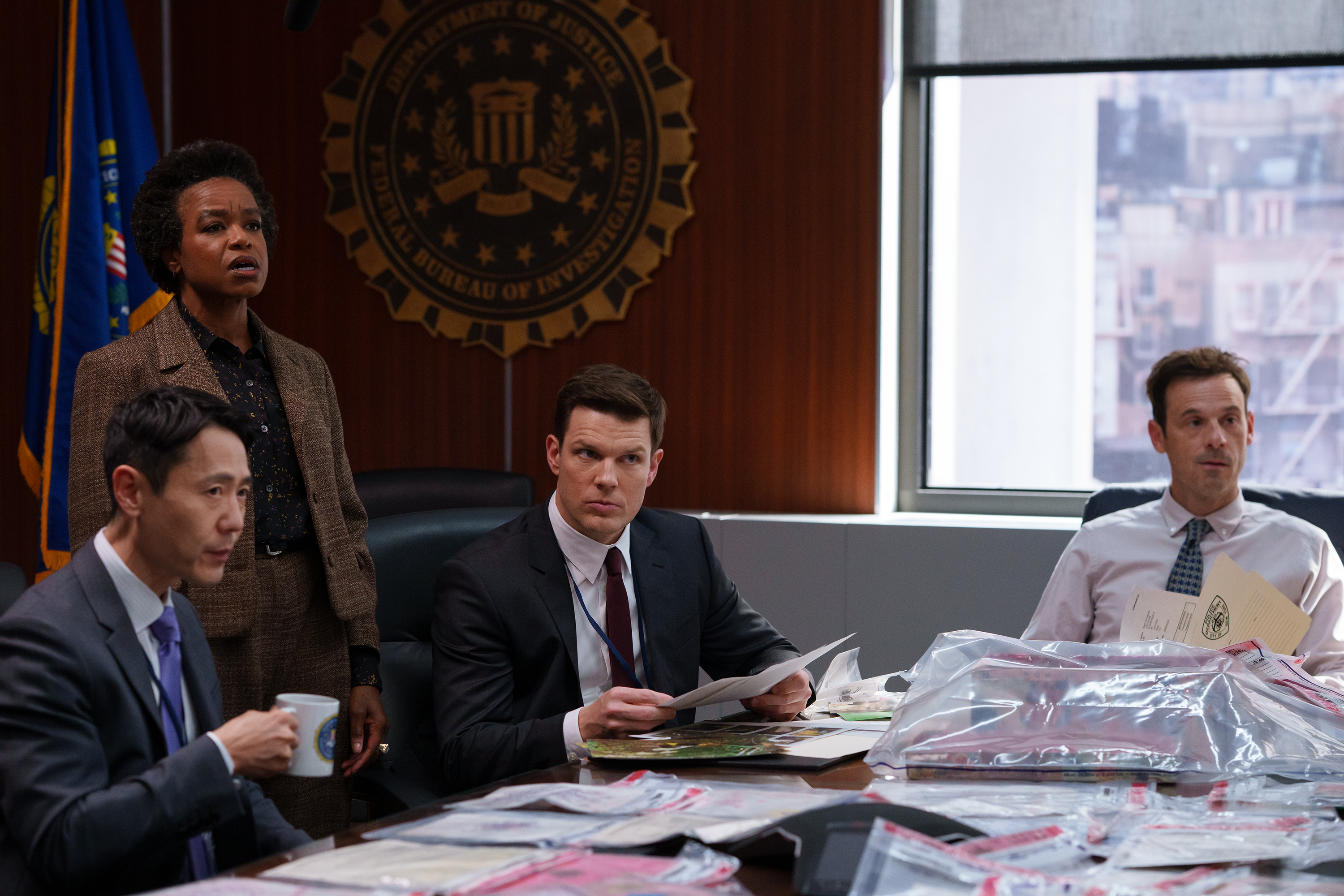
The relationship between Alice and Nora is one of the show’s strongest elements. They are not simply partners united by a common goal. They recognize pieces of themselves in each other, even as they question each other’s choices and coping mechanisms. Both women have learned how to survive within institutions that have not always treated them particularly well. Their tentative alliance becomes more compelling as Furious reveals the personal costs of that survival.
Then there are the men, who provide some welcome tonal relief without completely undermining the seriousness of the story. Scoot McNairy’s Detective Danny Kelly brings a sharp-tongued wit and comic energy to the otherwise heavy material. Danny’s history with Alice adds another layer to their relationship, while his eventual arc alongside Rob Yang’s FBI Agent Frank Choi gives the series an opportunity to develop some of its supporting characters beyond the standard detective-show archetypes.
That tonal balance is one of Furious’s biggest strengths. This is, unquestionably, a dark story involving sexual exploitation, trafficking, abuse and murder. Yet Meriwether, whose work on The Dropout and Dying for Sex has demonstrated an interest in complicated women and unexpected tonal combinations, refuses to make the series relentlessly grim. The humor can be mordant, uncomfortable and occasionally absurd, but it gives the characters room to breathe.
Furious becomes more confident as it progresses, particularly once the series begins looking beyond the mechanics of the murders and toward the emotional wreckage left behind by the people involved. The real mystery is not simply who is killing these men, but why Catherine bec ame the person capable of doing it — and what happens when a survivor turns her rage into a weapon.
That makes Furious more than another cat-and-mouse thriller. It is a story about what happens when justice is delayed, compromised or denied altogether, and about the uncomfortable space between understanding someone’s rage and condoning what they do with it.
Furious may begin in familiar territory, but it ultimately finds its own identity. With Rossum delivering one of her most restrained and layered performances, Petticrew bringing remarkable depth to a character who could easily have become a one-note revenge fantasy, and scene-stealing supporting cast, Furious is a bruising but worthwhile thriller — one that understands that sometimes the most interesting question isn't whether revenge is justified, but what revenge costs the person seeking it.

Juan Ayala
Juan Ayala is a Brooklyn-based entertainment journalist, podcast producer and host and serves as MediaVillage's Director of Content Management. In 2020, he launched his first podcast Actors With Issues, a "self-help podcast for actors, by actors&quo…