
Lead Human: Paul Polman’s Leadership Lessons and Legacy
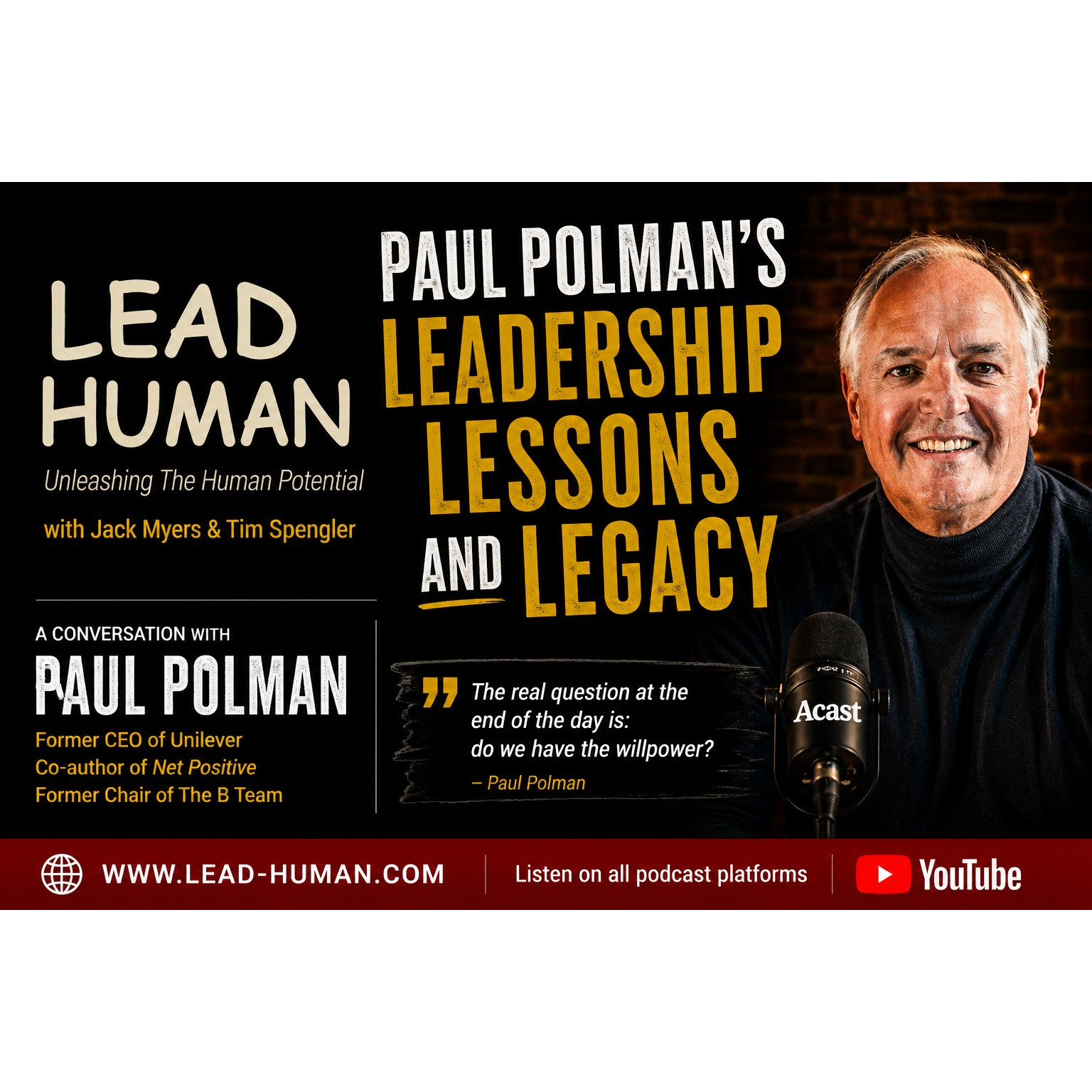
“If you invest in others, they invest in you. If you're focused on making others successful, you don't give them energy, you unlock energy. The real question at the end of the day is: do we have the willpower?”
When Paul Polman says those words, they land with the weight of experience, conviction, and responsibility.
Paul is not merely a former CEO. As the leader who transformed Unilever into one of the world's most admired purpose-driven companies, a co-architect of the United Nations Sustainable Development Goals, former Chair of The B Team, investor, philanthropist, and co-author of Net Positive, he has spent decades operating at the intersection of business performance and human progress. During his tenure as CEO, Unilever delivered extraordinary shareholder returns while advancing a model of leadership that challenged conventional assumptions about the role of business in society.
In this episode of Lead Human, Tim Spengler and I sit down with one of the most influential business thinkers of our time for a conversation that extends far beyond quarterly earnings, sustainability, or corporate governance. View the full video at www.lead-human.com, Lead Human - YouTube, and listen at your preferred podcast platform.
What emerges is a deeply human discussion about purpose, responsibility, leadership, and the choices confronting business leaders today.
Paul traces the roots of his leadership philosophy back to his parents, who grew up in the shadow of World War II and taught him that leadership begins with service to others. He reflects on formative experiences that shaped his worldview -- from witnessing generational unemployment in Newcastle, to surviving the Mumbai attacks, to climbing Mount Kilimanjaro alongside blind climbers whose resilience transformed his understanding of human potential.
The result is a conversation that challenges many of the assumptions that dominate modern business culture.
At a time when leadership is often equated with personal brand, status, and visibility, Paul argues that leadership is fundamentally about enabling others.
At a time when institutions reward competition, he advocates collaboration.
At a time when many organizations pursue short-term outcomes, he calls for a longer view rooted in responsibility and stewardship.
Perhaps most striking is his observation that many educational and corporate systems unintentionally strip humanity out of leadership. His critique is direct, thoughtful, and difficult to dismiss. Yet this is not a conversation driven by pessimism. Far from it.
Paul remains remarkably optimistic about the capacity of people, organizations, and institutions to create positive change. He believes the solutions to many of our greatest challenges already exist. The question is whether leaders possess the courage and commitment to act.
Throughout the discussion, he returns repeatedly to a theme that resonates deeply with the mission of Lead Human: the future will not be shaped by technology alone. It will be shaped by human judgment, human values, and our willingness to work together.
Among the many memorable moments in this conversation:
• Why he never aspired to become a CEO -- and why that may have made him a better one.
• The leadership lesson he learned from his father that continues to guide him today.
• Why he believes many organizations focus too much on individual leaders and not enough on institutions.
• His provocative assessment of modern business education and what it teaches future leaders.
• Why humanity, not technology, remains the defining challenge of our time.
• His perspective on AI, anxiety, trust, and the responsibility of leaders to create hope rather than fear.
• The surprising answer to what he wants his legacy to be.
This is not a conversation about management techniques. It is a conversation about what leadership looks like when viewed through the lens of service, dignity, empathy, and collective responsibility.
Paul Polman has spent his career proving that business can be a force for good without sacrificing performance. In this episode, he offers a rare and candid reflection on what he has learned, what still concerns him, and why he remains hopeful about the future.
For leaders navigating uncertainty, for executives wrestling with purpose, and for anyone seeking a more human-centered vision of leadership, this conversation is one you will not want to miss.
In this episode of Lead Human, Tim Spengler and I sit down with one of the most influential business thinkers of our time for a conversation that extends far beyond quarterly earnings, sustainability, or corporate governance. View the full video at www.lead-human.com, Lead Human - YouTube, and listen at your preferred podcast platform.

Jack Myers
With over five decades of experience in corporate leadership, B2B research, management insights, and technological trends, Jack Myers is a visionary leader and a trusted source for guidance and preparation as generative AI and machine intelligence dominates …