
Lead Human: Permutive’s Joe Root on Building a Better Internet

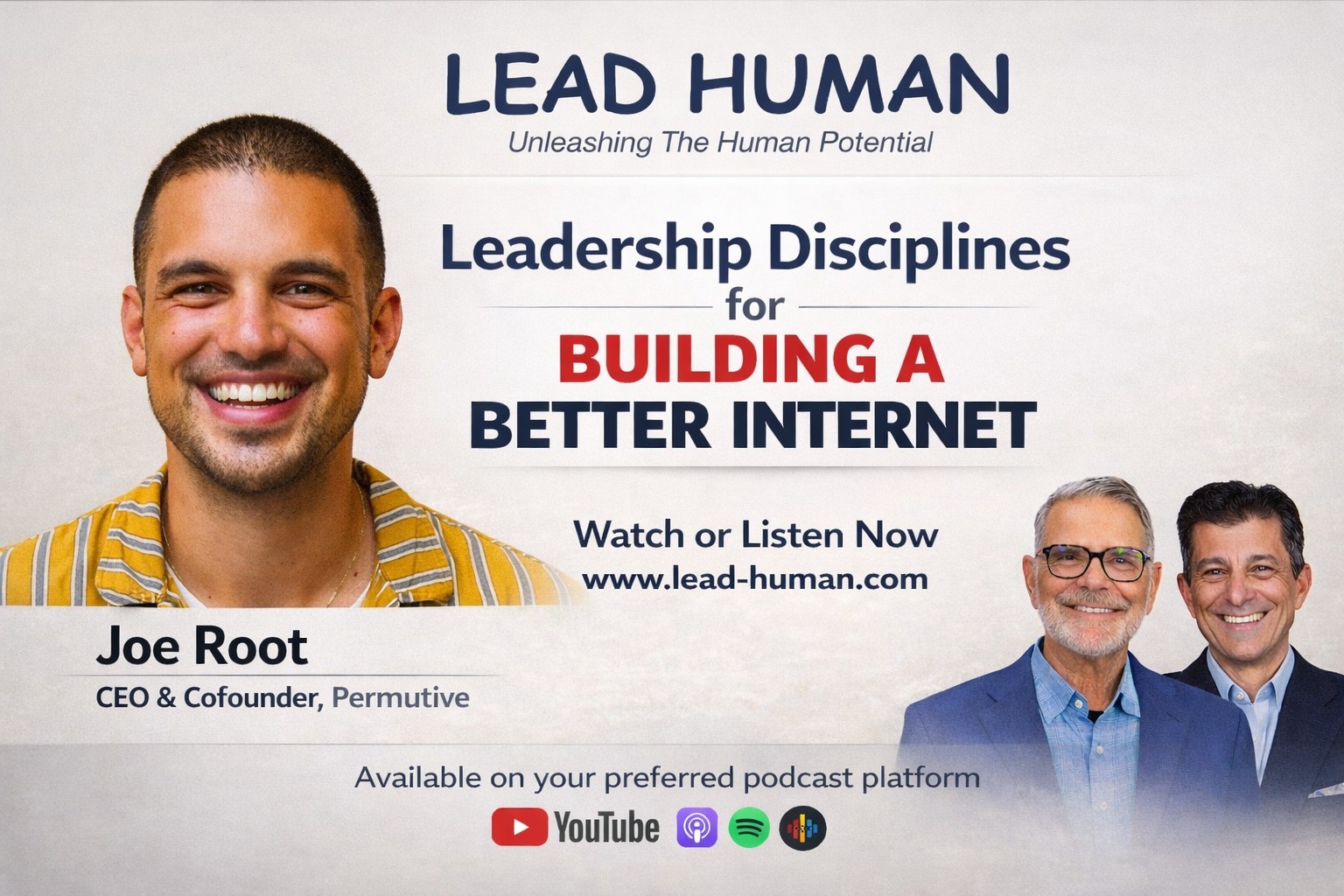
Joe Root’s leadership journey at Permutive offers a compelling example of what happens when mission, resilience, and curiosity combine. Watch or listen at Lead Human with Jack Myers and Tim Spengler<
The digital advertising system is not evolving. It is being forced to rebuild.
Joe Root, CEO and co-founder of Permutive, is not positioning himself as a disruptor of the current model. He is operating from a more urgent premise. The model itself is broken. Consumers distrust it, advertisers question its effectiveness, publishers are economically constrained, and regulators are accelerating change faster than the industry can respond. What Root outlines in our Lead Human conversation is not an incremental fix. It is a structural reset, one that places privacy, intelligence, and human contribution at the center of a new operating system.
Root and his team entered the advertising ecosystem with a simple premise: the system was failing everyone. “Consumers disliked the ad experience. Advertisers struggled to reach audiences effectively. Publishers faced declining revenue. Privacy concerns were intensifying.” Root’s answer was radical at the time but increasingly obvious today.
“When given choice, advertising should respect the consumer’s choice around their privacy preferences,” he says. Following that principle forced Permutive to rethink the foundational architecture of digital advertising. Now, Root believes artificial intelligence offers an opportunity for a broader reset.
AI, he argues, can rebuild the economic relationships between publishers, advertisers, and audiences while also freeing human workers from repetitive tasks. When used correctly, AI allows employees to focus on what Root calls “outsized contributions.” In other words, the uniquely human work that machines cannot replicate.
“If you pass repetitive work to agents,” he says, “people can spend more time on the work where they create the most impact.” That belief sits at the heart of the Lead Human conversation. Technology, in Root’s view, should not replace human creativity and judgment. It should amplify it.
If AI can rebuild the economics of advertising and elevate human contribution, what responsibility do leaders have to redesign the system rather than optimize the one that is already failing? Scroll down to continue reading.
What follows in this conversation is not a product pitch. It is a blueprint for how leaders can rethink the relationship between technology, trust, and human value. To hear Joe Root discuss these ideas in depth, watch or listen to the full episode of Lead Human with Jack Myers and Tim Spengler. All platforms are available atwww.lead-human.com, including YouTube, Spotify, and Apple Podcasts. Scroll down to continue reading.
The full conversation explores how Root applies these ideas in practice, from navigating the cultural differences between London and New York to helping shape industry standards with the IAB Tech Lab. His leadership journey offers a compelling example of what happens when mission, resilience, and curiosity combine.
When Joe Root reflects on who he is, the answer begins far from venture capital or the digital advertising ecosystem. “I’m definitely a dad and a husband,” he says. “I’ve got a little two-year-old daughter who just lights up my world.”
That grounding matters. It explains much about the leadership philosophy behind Permutive, the privacy-first data platform Root co-founded after graduating from university in London. His father was a pastor who believed deeply in multicultural community. His mother and aunt were therapists. An uncle led a charity serving autistic children. The through-line was clear. Mission, empathy, and community were not abstract values in Root’s upbringing. They were daily practice.
Those early influences now shape how he thinks about leadership, companies, and technology in an age increasingly defined by artificial intelligence. Root’s entrepreneurial journey did not begin with instant success. Like many founders, his path was defined by persistence.
After meeting his co-founder in their first week at university, the two spent years attempting startups that never quite worked. When they launched Permutive in 2014, success did not immediately follow. “The first three or four years we were wandering in the wilderness,” Root recalls. It took six or seven years before the company truly found its footing.
From those early struggles, Root distilled one leadership trait he believes separates founders from dreamers. “Resilience,” he says. “You get knocked down so much. The ability to pick yourself back up and keep going.” That resilience, paired with curiosity, became the foundation for building Permutive. But Root quickly learned that creating a successful company requires two very different capabilities.
“The first stage is building great products,” he explains. “The second stage is building a great company.” Many entrepreneurs excel at one and struggle with the other.
Product building demands obsession with problems and constant experimentation. Company building requires culture, leadership, and the ability to assemble teams capable of growing beyond the founder’s original vision.
For Root, building the team became the real leadership challenge.
He drew inspiration from his father’s work building multicultural communities. Root wanted Permutive to be a place where anyone could feel they belonged and where purpose was explicit. “I love the idea of building a team where anyone could feel at home in it, no matter who you are,” he says.
But culture alone is not enough. Root learned to identify and leverage the unique strengths each person brings to an organization. He became an advocate for frameworks such as Patrick Lencioni’s concept of “working genius,” which helps leaders understand how individuals naturally contribute to a team.
Equally important was creating what he calls psychological safety. “The team can feel safe to argue, to debate things, to have heated discussions,” Root explains. “But at the end of that we walk away knowing relationships haven’t been damaged.”
That balance between open debate and mutual respect has become a defining feature of his leadership philosophy. Root’s insights also extend to communication, a skill every founder must master. One of the most practical lessons he learned came while pitching investors.
Initially, he told the story he loved telling. It failed to resonate. Only later did he realize the problem. Investors were operating with a different mental model. “They’re really trying to figure out whether you’ve uncovered some major disruption,” Root explains.
In other words, the audience defines the story. Leaders must adapt their message depending on whether they are speaking to investors, employees, customers, or partners.
Inside Permutive, that lesson shaped how Root communicates vision. Founders naturally think years into the future. Teams need clarity about what to do today. If the vision becomes too distant, it stops guiding behavior. “The story can’t sit so far out in the future that people can’t apply it day to day,” Root says.
To hear Joe Root discuss these ideas in depth, watch or listen to the full episode ofLead Human with Jack Myers and Tim Spengler. All platforms are available atwww.lead-human.com, including YouTube, Spotify, and Apple Podcasts.
The conversation goes far deeper into how leaders can harness technology without losing sight of what matters most. Because in the AI era, unleashing human potential may be the most important leadership discipline of all.

Jack Myers
With over five decades of experience in corporate leadership, B2B research, management insights, and technological trends, Jack Myers is a visionary leader and a trusted source for guidance and preparation as generative AI and machine intelligence dominates …