
Mark Zuckerberg’s New Order of Things
The following commentary is excerpted from Jack Myers’ new book The Tao of Leadership: Harmonizing Technological Innovation and Human Creativity in the AI Era, available at all booksellers.

Despite progress, inertia within organizations remains alive and embedded. As we move toward a cybernetic world, many organizations are unprepared for a future where human and machine intelligence are interconnected to create a unified form of intelligence. Organizations are weighed down by overlapping siloed teams, each performing redundant tasks within departments, divisions, and business units. Originally intended to offset inertia, these decentralized silos now depend on it to survive. When confronted with the inability to invest in change, advocacy for the status quo becomes the norm. As Machiavelli wrote in 1513,
It must be remembered that there is nothing more difficult to plan, more uncertain of success, nor more dangerous to manage than the creation of a new order of things. For the initiator has the enmity of all who would profit by the preservation of the old institutions, and merely lukewarm defenders in those who would gain by the new ones.
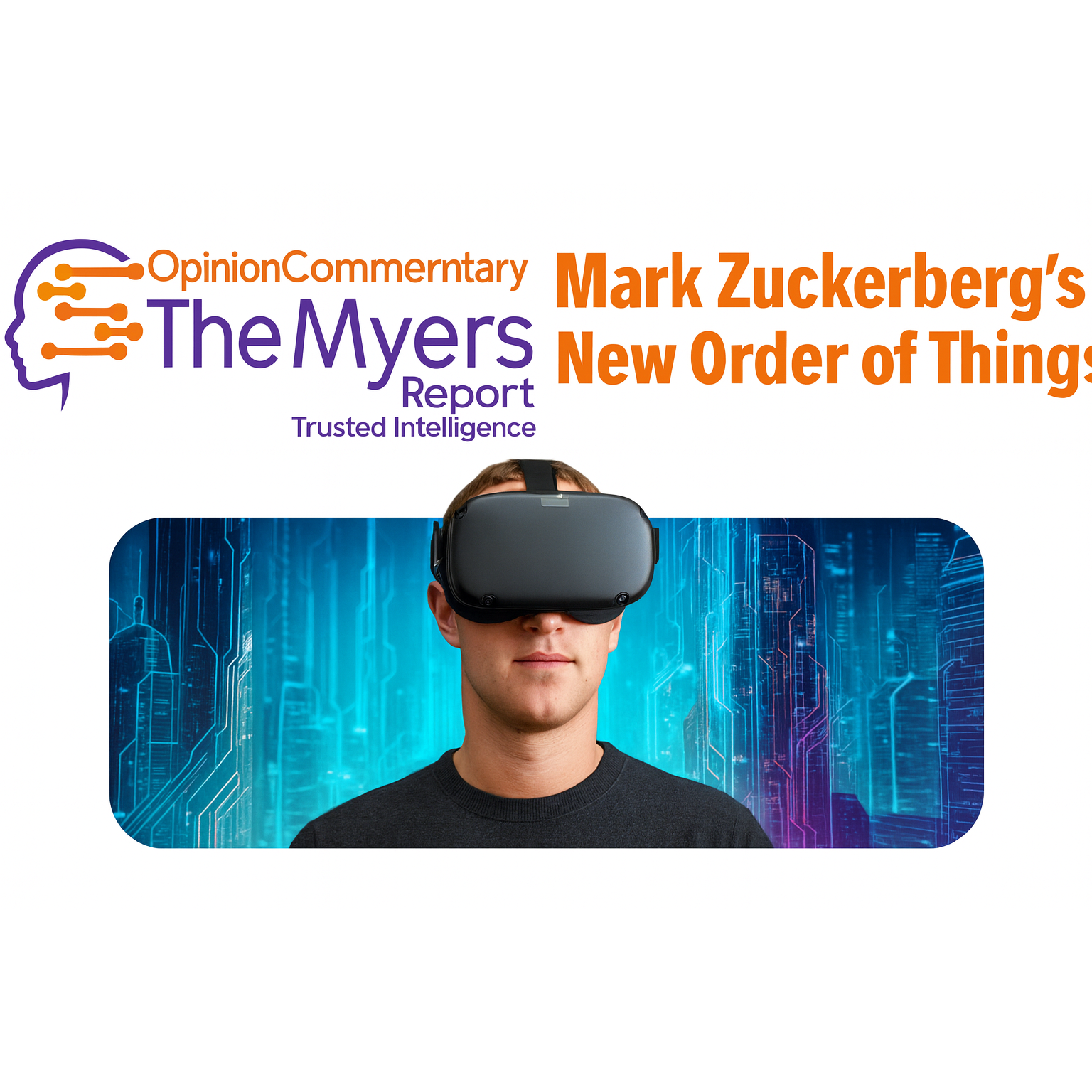
Mark Zuckerberg, one of technology’s most aggressive “initiators of a new order of things,” has been victimized by the tendency toward inertia. VR and AR, bundled together and branded as the “metaverse,” are prime examples of technologies that burst into the zeitgeist but gained only lukewarm defenders. The term “metaverse,” first coined by Neal Stephenson in his 1992 novel Snow Crash, has significantly influenced contemporary discussions about the future of digital interaction and virtual environments. This concept of a VR-based successor to the internet, where users interact through avatars in a shared digital space, has inspired numerous technological advancements and strategic initiatives.
In October 2021 Zuckerberg announced a strategic rebranding of Facebook to Meta, reflecting a pivot toward building the metaverse and positioning it as the core of the company’s future strategy. The metaverse, as envisioned by Zuckerberg, aims to be a fully immersive digital environment where users can work, play, socialize, and create in interconnected virtual spaces.
Despite this ambitious vision, Zuckerberg’s embrace of the metaverse faced significant criticism. Skeptics argued that the concept is overidealistic and that the substantial investments required may not yield the expected returns. The rebranding has been viewed as a distraction from ongoing issues within the company, such as data privacy concerns and regulatory scrutiny. Even within Meta, siloed departments remain embedded in established cultures and revenue models that depend on preserving the old institutions. Even a leader with autocratic control could not overcome the quiet and passive resistance toward change. To succeed, Zuckerberg began a slow, methodical, and structured reorganization leading toward greater centralization and integration of capabilities.
Once restructured over the next decade, Zuckerberg’s vision, which remains deeply embedded in Meta’s corporate culture and future strategic investments, will be operationally implemented. The company continues to pour resources into developing VR and AR technologies, which are seen as essential components of the metaverse. By investing in platforms that allow for seamless interaction between the real and virtual worlds, Meta aims to revolutionize how people engage with technology and vice versa. For instance, Meta’s social VR platform, Horizon Worlds, allows users to create and explore virtual worlds, interact with friends, and participate in shared experiences. Additionally, Meta’s investment in AI and machine learning technologies underscores its commitment to advancing the capabilities of the metaverse.
Meta’s strategic focus also includes building an economy within the metaverse, where users can buy, sell, and trade digital goods and services. This vision includes creating new economic opportunities and transforming how we interact with digital content. By building interoperable platforms that allow for a seamless user experience across different applications and devices, Meta is laying the groundwork for a future where the metaverse becomes a central part of our digital lives. The adoption of the metaverse as a core strategy by Meta reflects a broader trend in the technology industry. Companies are increasingly exploring how immersive digital experiences can transform user interaction, offering new opportunities for engagement and innovation.
Addressing Realities as WeUnlock New Possibilities
As organizations across various sectors begin to consider the potential of the metaverse, they will need to accelerate the breakdown of legacy silos and integrate advanced technologies, imagination, emotion, and speculative thinking into their strategic planning.
The power and importance of imagination in driving progress cannot be overstated. It is through imaginative foresight that we can identify opportunities for growth, mitigate potential risks, and inspire a culture of innovation within our organizations. Future forecasting, as an extension of this imaginative process, becomes a strategic tool for planning and decision-making. By incorporating speculative scenarios into strategic planning, businesses can cultivate resilience and agility, ensuring they remain competitive in an ever-changing market.
In the realm of Cybernetic Reality, the integration of human creativity and empathetic emotional endeavors into machine algorithms represents a profound shift. This convergence allows machines to not only perform tasks but to also engage in creative problem-solving and emotional intelligence, enhancing their utility across various domains. As we transfer these human attributes into algorithms, we unlock new possibilities for innovation and efficiency.
Globally, however, stark disparities persist. In many parts of the world, education is still denied to many, and access to the internet and mobile connectivity is limited. These disparities create a significant gap between those who can leverage technological advancements and those who cannot. The ability to master machine intelligence will increasingly define the “haves” and “have-nots.”
As we prepare for this future, it is essential to address global disparities in access to education and technology. Ensuring equitable access to AI and digital technologies will be crucial for harnessing the full potential of the generation born into this new reality. By bridging digital divides and fostering inclusive innovation, we can create a society where everyone, regardless of their starting point, can contribute to and benefit from the advancements that shape our world.

Jack Myers
With over five decades of experience in corporate leadership, B2B research, management insights, and technological trends, Jack Myers is a visionary leader and a trusted source for guidance and preparation as generative AI and machine intelligence dominates …