
Music Videos Never Stopped Being TV -- Advertisers Just Forgot to Look
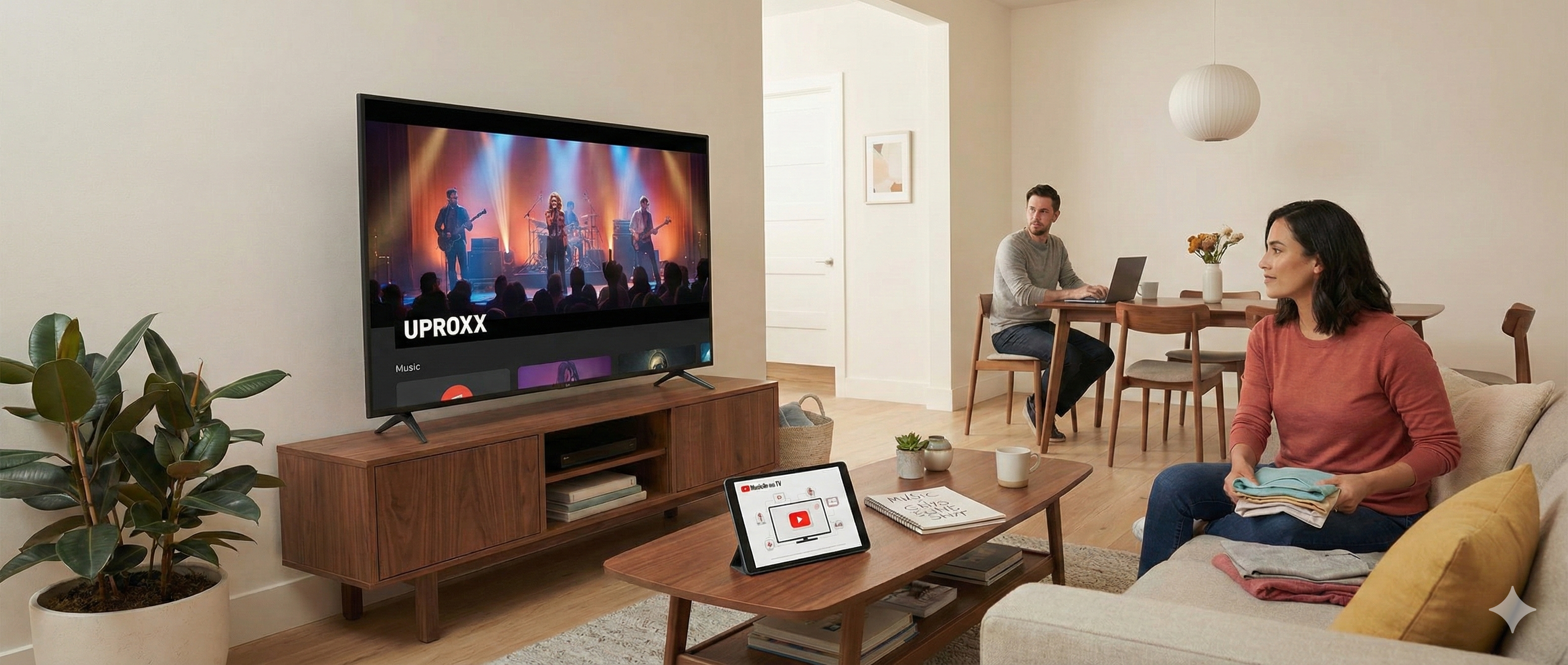
The industry loves repeating that YouTube is the No. 1 streaming platform on television. But when people explain why, the talking points almost always point to creators, Shorts, gaming, commentary, or podcasts. But that framing misses one of the biggest, oldest, and still wildly dominant viewing behaviors on YouTube’s TV app: Music videos. There is no major U.S. television network actively programming music videos anymore yet the audience for music-on-TV is larger than ever -- and it now lives on YouTube. While marketers obsess over creator culture, tens of millions of people turn on YouTube the same way previous generations turned on MTV -- as a constant, living-room soundtrack. And because the industry rarely categorizes this behavior as “CTV,” it has become one of the largest blind spots in modern media planning
The Reality Check: Adults Watch More YouTube Than They Think
I teach a graduate course at Syracuse University. My students aren’t Gen Z -- they’re in their 30s and 40s, working in marketing, business, healthcare, and communications.
While reviewing Nielsen’s Gauge, which again showed YouTube leading all streaming platforms in U.S. TV usage (around 12-13% of total TV viewing), I asked:
“How many of you watch a lot of YouTube?”
Barely any hands went up.
But after one student admitted she has YouTube music playlists running on her TV all day -- while cooking, working, cleaning, or hosting friends -- half the class suddenly realized they do the same.
They just never counted that as “watching YouTube.”
This perception gap -- the difference between people’s stated media habits and their actual CTV behavior -- is enormous.
And overwhelmingly, that gap is filled by music.
Music Is Still One of YouTube’s Most-Watched Categories
According to Fourthwall’s 2025 analysis of YouTube viewing categories, Music remains one of the most-streamed verticals on the platform, spanning official videos, lyric videos, live sessions, covers, fan edits, performance content, and more.
Music has never stopped being one of YouTube’s most reliable engines of global watch-time.
But here’s the part advertisers routinely get wrong:
This isn’t UGC. This is professional, rights-cleared, brand-safe video at global scale.
UPROXX: A 2025 Case Study in CTV Music Behavior
UPROXX Studios -- one of the largest youth-culture and music publishers in the U.S. -- is a perfect illustration of this shift.
According to their 2025 Media Kit, UPROXX:
- Reaches over 100 million viewers monthly across platforms
- Generates billions of monthly video views
- And sees a majority of that consumption happening on Connected TV
This isn’t a TikTok-first music publisher.
Uproxx is CTV-first media network whose audience naturally gravitates toward the biggest screen in the house.
UPROXX’s CTV footprint includes:
- Official artist sessions
- High-production performances
- Music journalism and culture shows
- Original formats that sit adjacent to the music ecosystem
- Premium tentpole launches and editorial franchises
This is the modern version of music television -- except instead of a single linear feed, it’s personalized, on-demand, and distributed across the country’s No. 1 streaming platform. Just scale, culture, and connected-TV behavior.
Neal Mohan Has Been Signaling This Trend Clearly
In his 2025 CEO letter, Neal Mohan emphasized that viewers now watch over 1 billion hours of YouTube on TV screens every day, and TV is now the fastest-growing YouTube surface.
He frames music explicitly as one of the formats that define YouTube’s cultural gravity -- alongside Shorts, long-form storytelling, and live streaming.
Meanwhile, YouTube’s Head of Music, Lyor Cohen, has been even more blunt:
- YouTube paid the music industry over $8 billion in the last fiscal year.
- YouTube Music & Premium now have 125 million+ subscribers.
- 2 billion logged-in viewers watch music videos on YouTube every month.
If a traditional television network posted those numbers, it would be the only story in the trades for a month.
But because the behavior doesn’t look like “television,” advertisers often disregard it.
CTV Music ≠ Audio -- It’s Audio + Sight + Storytelling + Cultural Context
CTV music viewing is something entirely different.
It combines the habitual, always-on nature of audio with:
- the emotional intensity of performance
- full-screen brand exposure
- contextual alignment with artists and genres
- measurable big-screen attention
- visual storytelling and brand integration
For example, UPROXX’s Visionaries performance series(filmed in extended reality), which debuted with Gunna, delivered millions of views, over 10 million earned impressions, top-decile performance relative to all UPROXX launches, and double-digit lifts in awareness and favorability for brand partners.

That is not “audio.”
That is not “pre-roll.”
That is brand storytelling inside a culturally significant environment.
Fanbases Aren’t Just Audiences -- They’re Commercial Segments
One of the strongest insights emerging from UPROXX’s 2025 Artist Intelligence work is how commercially distinct YouTube music audiences are. Music fandom on YouTube is not generic -- it’s category-specific consumer behavior.
Examples from recent UPROXX Artist Insight briefs:
- Fred again.. fans over-index for activewear, design brands, energy drinks, experiential culture, DSLR/GoPro usage.
- Zach Bryan fans lean into Disney, NFL, WWE, weddings, family brands, and Americana retail.
- Twenty One Pilots fans index heavily for gaming, Marvel/DC, energy drinks, and youth entertainment.
- Cardi B fans over-index in beauty, luxury fashion, footwear, and female-forward lifestyle brands.
- Daft Punk fans are design-heavy, gaming-forward, cross-generational, and tech-leaning.
- Alex Warren and Sombr attract Gen Z+Millennial lifestyle spenders: Starbucks, Crocs, fast fashion, festival brands, BookTok, and wellness.
These aren’t cheap pre-roll audiences.
They are brand-ready micro-cultures that advertisers pay premiums for elsewhere.
CTV music impressions are one of the fastest ways to reach them at scale.
So What Should Advertisers Do?
1. Separate “YouTube CTV” into two distinct buckets: creators + music. Music deserves its own line item. The behavior and outcomes are different.
2. Treat music video CTV as the upgrade to audio. If you’re buying Spotify + podcast + streaming audio, add YouTube music CTV to complete the sensory experience.
3. Buy inside premium music ecosystems, not across them. That means planning around official artist sessions, performance series, tentpole drops, culture shows, and high-signal playlists.
4. Target by fanbase affinities, not just demographics. Use the kind of fan-mapping UPROXX produces to align brand categories with artists whose audiences already over-index for them.
5. Measure like TV. Brand lift, incremental reach, CTV completion, halo effects -- not CTR.
The Bottom Line
Music videos never stopped being television.
Television just changed -- and music went with it.
As YouTube dominates CTV attention, music is one of its biggest engines, yet one of the least-discussed in ad planning.
If advertisers want the next advantage in streaming, they need to stop viewing YouTube music as “digital video” and start treating it as what it has become:
The largest, most culturally influential music TV network in America -- and one of the most powerful CTV ad opportunities of 2025.
Posted at MediaVillage through the Thought Leadership self-publishing platform.
Click the social buttons to share this story with colleagues and friends.
The opinions expressed here are the author's views and do not necessarily represent the views of MediaVillage.org/MyersBizNet.

Nick Cicero
Nick Cicero is an entrepreneur and digital strategist with more than 15 years of experience working to help businesses understand their data, optimize their content engagement and drive revenue. He currently is consulting, advising and investing in tech comp…