
‘Big Mistakes’ Review: Netflix’s Anxiety-Fueled Crime Comedy Is a Hilarious Mess
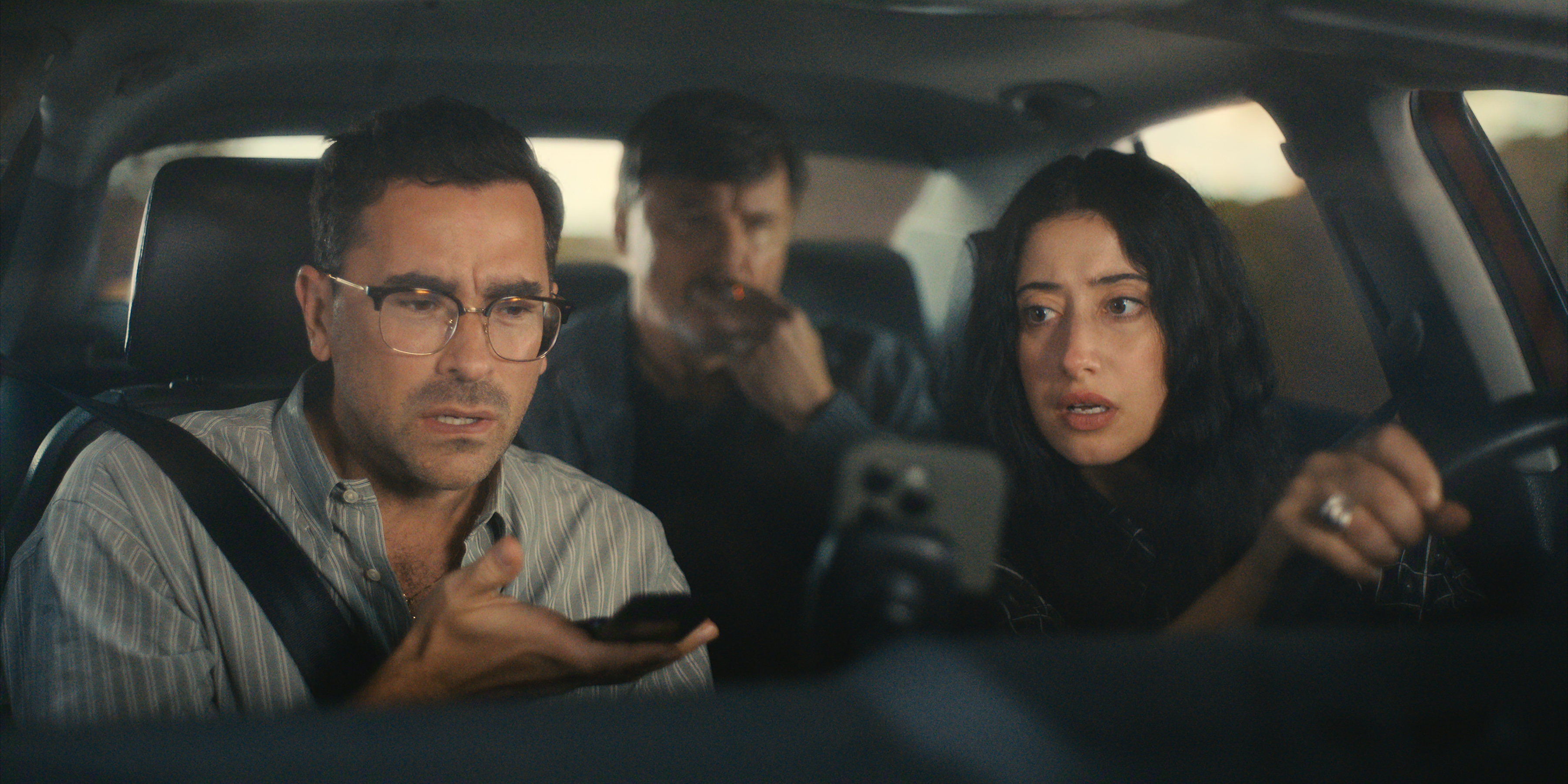
Crime comedies live and die by one question: how much nonsense are audiences willing to accept before the wheels come off? Netflix’s Big Mistakes knows exactly where that line is and then gleefully speeds past it at full force. The result is an entertaining, darkly funny, anxiety-fueled ride that thrives on sharp writing, strong performances, and a willingness to embrace absolute chaos.
Created by Dan Levy and Rachel Sennott, Big Mistakes throws viewers into the lives of a deeply dysfunctional New Jersey family who accidentally stumble into organized crime after one very bad decision snowballs into many, many worse ones. It’s an absurd premise, sure, but the series succeeds because it never asks viewers to believe its escalating insanity is normal. Instead, it asks something much simpler: what if the absolute worst people imaginable were forced to handle increasingly impossible situations? Turns out, that’s very funny!
The series moves at an almost breathless pace, with twists arriving so rapidly that stopping to question the logic often feels beside the point. Some viewers may find the plotting too over-the-top or implausible, but Big Mistakes operates best when viewed less as grounded crime drama and more as an escalating panic attack with punchlines. And for anyone who has met people who are deeply anxiety-ridden, pathologically indecisive, or capable of making catastrophically bad choices under pressure, the show’s emotional reality actually feels more truthful than its circumstances.
Dan Levy anchors much of that chaos with one of his most interesting performances to date. Audiences expecting a variation of David Rose from Schitt’s Creek may be surprised by Nicky, an anxious pastor constantly trapped between responsibility, guilt, and absolute terror. Levy keeps the character grounded even as events spiral further out of control around him. There’s still the impeccable comedic timing audiences expect, but Nicky feels less performative and more human — often functioning as the voice of reason in a family where reason is in desperately short supply.
That dynamic works especially well opposite Taylor Ortega’s Morgan, who frequently acts first, thinks later, and rarely learns from experience. Ortega delivers perhaps the series’ biggest surprise. Her performance is chaotic without becoming exhausting, and she finds vulnerability underneath Morgan’s impulsiveness that keeps the character from becoming cartoonish. Morgan’s recklessness drives much of the plot, but Ortega’s charisma ensures viewers keep rooting for her even when she is objectively making terrible decisions.
Then there’s Laurie Metcalf.
Metcalf has spent decades proving she can do almost anything, but Big Mistakes gives her one of her most delightfully unhinged roles in years. As Linda, the family matriarch juggling grief, politics, parenting, and several simultaneous breakdowns, Metcalf weaponizes panic in ways that are both hilarious and oddly moving. Wide-eyed, frantic, emotionally combustible — she delivers the sort of performance that constantly threatens to overpower scenes but never actually does. It’s hard not to think of some of her most iconic turns when watching her here; she attacks every moment with the energy of someone who understands that comedy and desperation are often separated by only a few inches.
The ensemble chemistry becomes the show’s secret weapon. Much like Schitt’s Creek, the family dynamics often work better than the plot mechanics themselves. The sibling bickering feels authentic, the resentment feels earned, and the affection hiding underneath all the dysfunction keeps the series emotionally grounded even when the story veers into increasingly outrageous territory. And outrageous it gets.
The criminal underworld storyline becomes more convoluted with every episode, introducing increasingly bizarre situations, shifting allegiances, and reveals that arrive so quickly viewers barely have time to recover before the next problem emerges. Remarkably, this mostly works because the pacing is so relentless. Episodes move quickly, dialogue stays sharp, and the show rarely lingers long enough for viewers to question the mechanics behind every decision.
Perhaps the greatest compliment that can be given to Big Mistakes is that it remains consistently unpredictable. Many of the series’ biggest turns genuinely feel blindsiding, and the cliffhanger finale delivers a reveal that initially seems almost too unexpected before clicking satisfyingly into place in retrospect.
Not every piece fits perfectly. Some emotional beats could use more breathing room, and certain plot developments require viewers to check in their Logic Police hats at the door. But Big Mistakes understands that entertainment sometimes matters more than precision.
Funny, dark, fast-moving, and gloriously ridiculous, Big Mistakes succeeds because it fully commits to its own madness. It transforms bad decisions into spectacle, anxiety into comedy, and dysfunction into something strangely lovable.
Stream all episodes of Big Mistakes on Netflix.
Posted at MediaVillage through the Thought Leadership self-publishing platform.
Click the social buttons to share this story with colleagues and friends.
The opinions expressed here are the author's views and do not necessarily represent the views of MediaVillage.org/MyersBizNet.

Juan Ayala
Juan Ayala is a Brooklyn-based entertainment journalist, podcast producer and host and serves as MediaVillage's Director of Content Management. In 2020, he launched his first podcast Actors With Issues, a "self-help podcast for actors, by actors&quo…