
Political Advertising Finds New Precision in CTV and Programmatic
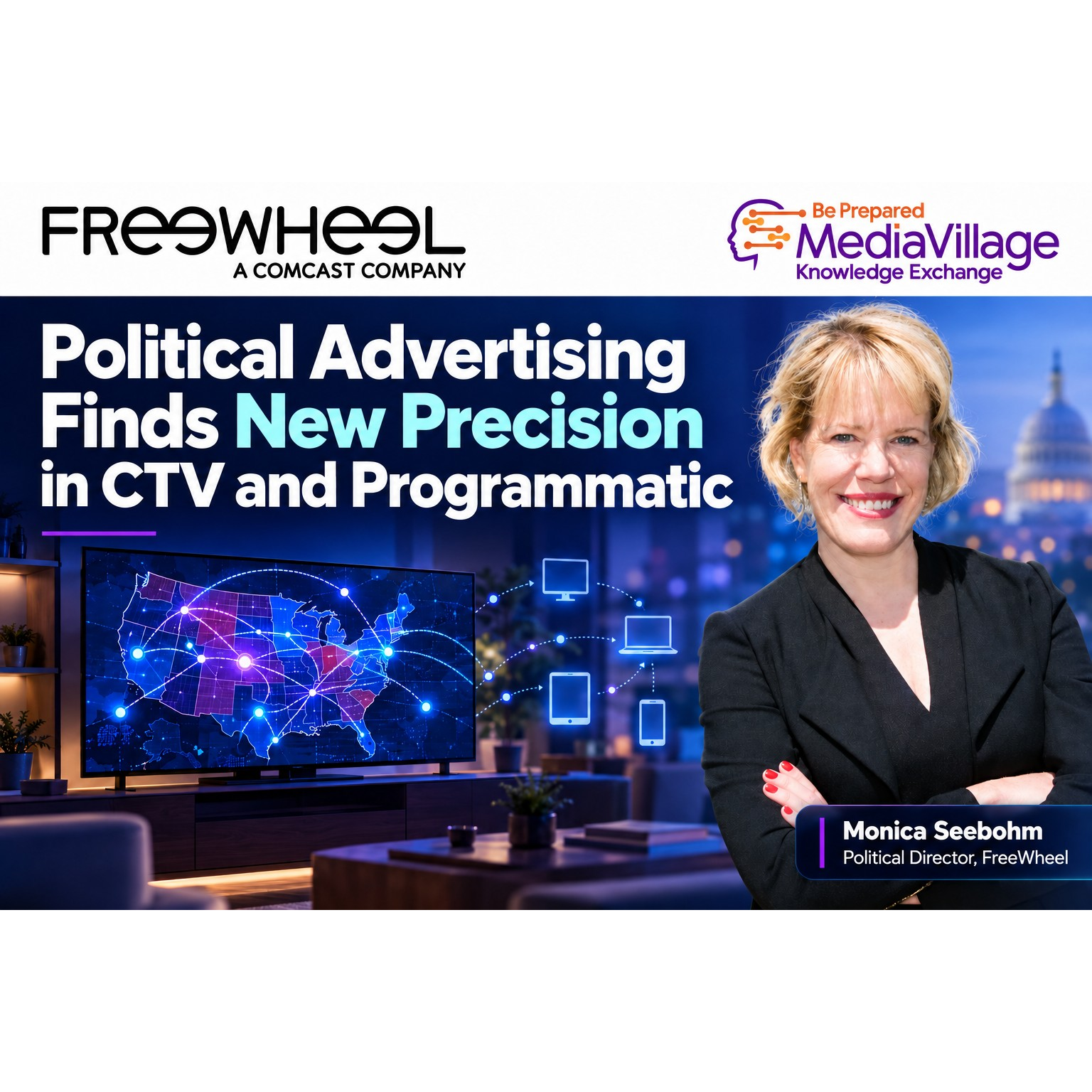
As political advertising continues to evolve, campaigns are increasingly balancing the reach of traditional television with the precision of streaming, connected TV (CTV), and programmatic buying. For FreeWheel executive Monica Seebohm, the opportunity is not simply about reaching more voter audiences but reaching the right voter audiences in environments they trust.
“The headline is that political advertisers want to align with premium, trustworthy environments,” Seebohm said. “They want to be in a place where potential voter audiences are watching something on streaming or TV and they find that source credible, and then the associated ad is also credible.”
That combination of premium content and sophisticated targeting is becoming increasingly important as campaigns contend with fragmented viewing habits, concerns about digital credibility, and unprecedented levels of political advertising spending. This midterm election is already on track to outspend 2024’s presidential election cycle for the first time in history.
Broadcast television remains the largest component of political advertising, but streaming and CTV are rapidly gaining ground. Seebohm pointed to an August study examining where voters get political information and where political marketers are placing their messages. While she described the research as directional, its findings showed broadcast share at approximately 48%.
“Streaming is going to be 23-25% of ad placements, because it's effective, and it's reaching audiences where they watch,” Seebohm revealed.
Digital, meanwhile, represented about 15% of the ad buy in the study. Seebohm attributed some of that decline to concerns about credibility, including the growing presence of AI-generated social media content. “It has lost its credibility,” she said. “Content being generated by AI is one of those reasons, because voters have a real concern about that.”
Broadcast remains essential, particularly for broad reach, but streaming has become increasingly important for younger audiences and cord cutters who almost exclusively watch film and television via streaming platforms.
For political campaigns, the value of streaming extends beyond simply reaching audiences who have left traditional television. Seebohm emphasized the importance of placing political messages alongside programming that viewers actively choose to watch.
“It seems like broadcast television. You're watching it on the biggest screen in the house. You're watching a streaming TV show. Here comes an ad,” she said. “If you're into that TV show, you're more likely to be into that ad and that candidate or issue.”
At the same time, political consultants have become increasingly sophisticated about identifying exactly whom they need to reach. Seebohm, who has spent a decade working in political advertising, said she initially underestimated that sophistication.
“These marketers… are unbelievably smart in what they're doing. And they are up to speed on technology. They're up to speed on AI. They're up to speed on agentic buying.”
Political consultants, she said, “pretty much know who they need to reach” in a particular battleground state, congressional district or around a specific issue.
That precision is supported by the combination of Comcast data, political data providers, and voter files. Seebohm said the ability to combine Comcast’s first-party deterministic data insights from authenticated households with political data enables advertisers to reach specific voter audiences.
“We can put that all together and then reach that voter where they are,” she said, “in a premium environment when they're watching something they want to watch.”
Seebohm compared today's capabilities with the highly targeted nature of political direct mail. “Back in the day, you didn't get more targeted than that,” she said of the U.S. Postal Service's ability to reach registered voters at their addresses. “
Today, we can use data to bring that same level of precision to the TV screen.
“Because we understand the authenticated household identity, we’re able to deliver match rates above 90%, giving our clients confidence that we’re reaching the right voter audiences,” she added. “We can take data and make sure that we are getting that message on streaming and addressable.”
That precision becomes particularly valuable as voters move between screens. Political marketers can potentially reach the same voter audiences across streaming television, addressable TV, and mobile devices.
With political spending reaching historic levels, efficiency is another critical consideration. Seebohm divides the challenge into two areas: working media and optimization. For working media, campaigns want as much of their budget as possible to actually reach voter audiences rather than being absorbed by fees.
"It starts with getting as close to the supply as possible,” she said. “Buyer Cloud’s direct connection to FreeWheel publishers gives buyers a more efficient path to premium CTV inventory and helps more of their investment go toward reaching key audiences.”
The second priority is optimization. Political campaigns have a unique challenge because they cannot simply wait until the end of a campaign to evaluate results.
“They really don't ask for a post-campaign report,” Seebohm said. “You know why? They got their report. They either won or they lost.”
That makes real-time visibility especially important. Through Comcast Advertising’s LENS data insights, campaigns can see which audiences were exposed to their messaging and extend that reach across traditional TV, addressable TV, and programmatic opportunities.
The growing sophistication of political advertising is also reflected in where buyers are concentrating their spending. “Based on that, the battleground states are where the action is,” Seebohm said, pointing to Michigan, Texas, and California. She said sports, followed by local news, weather, and Spanish-language programming are also among the major content categories driving political demand.
Sports can provide especially valuable opportunities in battleground states. Seebohm cited research showing that more than half of NFL fans do not align with a political party, creating an opportunity to reach impressionable voters.
She also highlighted the ability to target viewers beyond a simple ZIP-code level.
“In the congressional district, it is not ZIP code dependent,” Seebohm said. “You split a zip code down the middle, and it's New York 1 and New York 2, and with Buyer Cloud we're able to do that exact level of congressional district targeting. That could be the difference between reaching voters in the right district or wasting impressions on audiences that fall outside that area.”
Spanish-language programming represents another significant opportunity, with Seebohm saying demand is “about equivalent to sports, local news, and weather.”
Together, those capabilities point toward a political advertising ecosystem where television's reach and credibility increasingly intersect with the precision of programmatic technology -- allowing campaigns to find specific voter audiences, reach them across screens, and optimize their media investment in real time.
Posted at MediaVillage through the Thought Leadership self-publishing platform.
Click the social buttons to share this story with colleagues and friends.
The opinions expressed here are the author's views and do not necessarily represent the views of MediaVillage.org/MyersBizNet.

Juan Ayala
Juan Ayala is a Brooklyn-based entertainment journalist, podcast producer and host and serves as MediaVillage's Director of Content Management. In 2020, he launched his first podcast Actors With Issues, a "self-help podcast for actors, by actors&quo…
