
Profiles in Leadership: Peter Winick on the Business of Thought Leadership
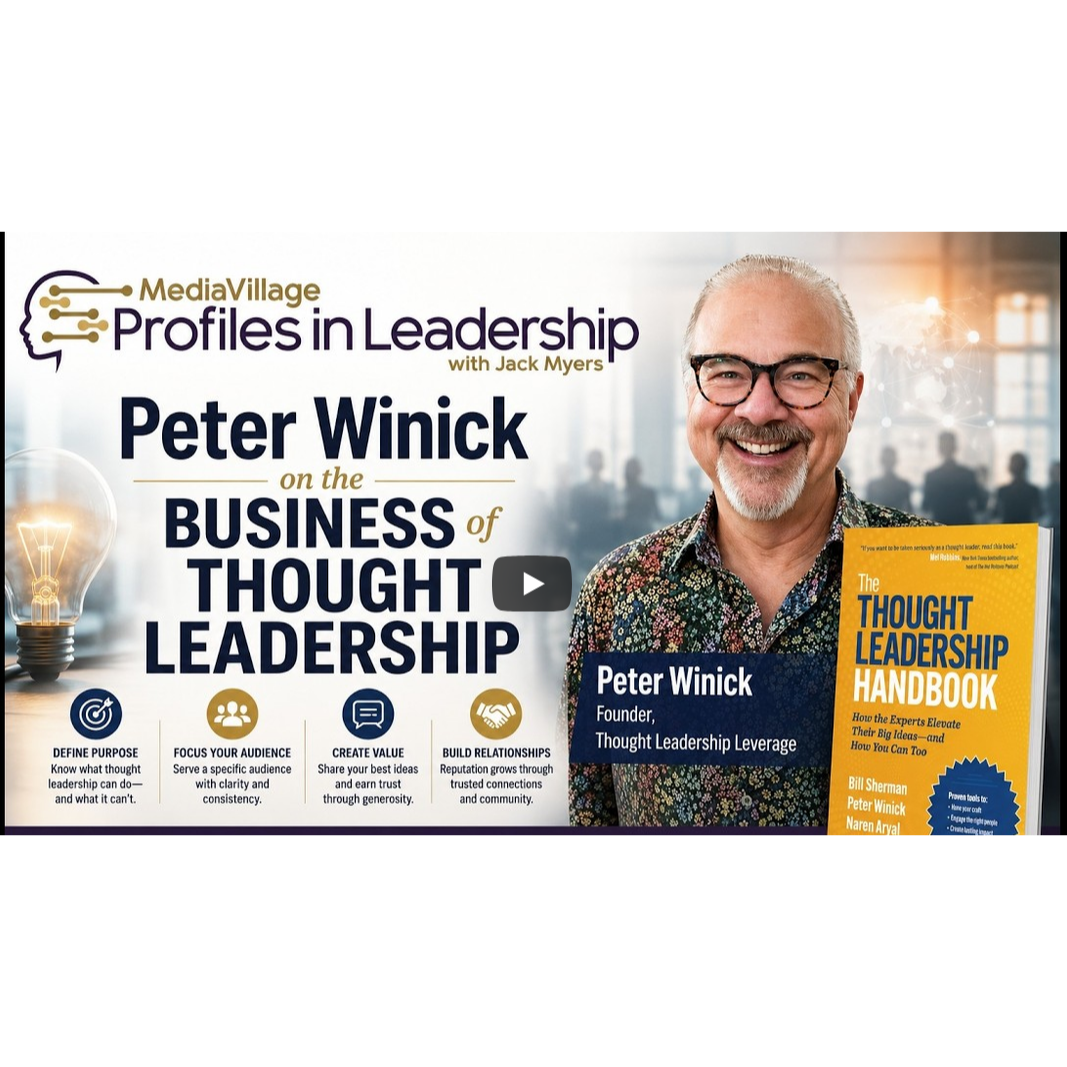
In an era when everyone claims to be a thought leader, Peter Winick explains what separates enduring influence from endless content -- and why his new book belongs on every serious leader's desk.
Over nearly five decades, I've watched thought leadership evolve from a specialized discipline into a crowded marketplace. Today, millions of books, newsletters, podcasts, and LinkedIn posts compete for attention. The barriers to publishing have disappeared. The barriers to earning trust have never been higher.
That is why my recent conversation with Peter Winick was so timely.
For more than twenty years, Peter has helped executives, academics, authors, and entrepreneurs transform expertise into influence through his firm, Thought Leadership Leverage. His new book, The Thought Leader's Handbook, co-authored with Bill Sherman and Naren Aryal, is not another book about creating content. It is a practical guide to building a sustainable thought leadership platform grounded in purpose, judgment, and strategy.
Peter begins with a simple but important observation: almost everyone today claims to be a thought leader, yet few can clearly define what thought leadership actually is. Before writing articles, launching podcasts, or publishing books, organizations and individuals must first understand what they want thought leadership to accomplish -- and what it cannot accomplish.
Throughout my career, I've seen organizations mistake thought leadership for marketing or promotion. Peter makes a compelling case that authentic thought leadership begins with solving meaningful problems for a clearly defined audience.
His advice becomes even more relevant in the age of AI.
Rather than treating AI as a shortcut, Peter demonstrates how it can become an extraordinary research partner. His team analyzed hundreds of podcast interviews and millions of words of conversations to uncover patterns, frameworks, and insights they had long forgotten. AI accelerated discovery, but human judgment determined what deserved to become enduring ideas.
That balance between artificial intelligence and human discernment is one of the book's most valuable lessons.
Peter also challenges the belief that authors should withhold their best ideas. He recounts Stephen R. Covey's decision to include the complete Seven Habits framework in his landmark book despite advice to hold valuable material back. The result became one of the bestselling business books ever written because readers who receive genuine value become far more likely to seek deeper engagement.
As I prepare for the publication of Your Third Brain, that lesson resonated deeply.
Equally valuable is Peter's insistence that success rarely comes from trying to reach everyone. The strongest thought leaders understand precisely who they serve. They don't chase every new platform or social trend. Instead, they identify where their audience already gathers and communicate there with consistency and purpose.
Perhaps the most practical insight from our conversation concerns discoverability. In a world where millions of books and podcasts compete for attention, success rarely comes from mass exposure. It comes through trusted recommendations, respected communities, and relationships built over time. Reputation, Peter reminds us, is still the most valuable marketing asset a thought leader possesses.
The publishing landscape has changed dramatically. AI has accelerated creation. Self-publishing has democratized distribution. Digital platforms have multiplied opportunities. Yet Peter reminds us that the fundamentals remain unchanged: know your audience, create genuine value, earn trust, and cultivate meaningful relationships.
Those principles have guided my own career for nearly fifty years, and they are equally relevant for the next generation of leaders.
Whether you're an executive, entrepreneur, consultant, academic, or aspiring author, The Thought Leader's Handbook provides a practical roadmap for transforming expertise into lasting influence. I recommend it without hesitation.

Jack Myers
With over five decades of experience in corporate leadership, B2B research, management insights, and technological trends, Jack Myers is a visionary leader and a trusted source for guidance and preparation as generative AI and machine intelligence dominates …