
Uncovering Hidden Buyers: Why Decision Committees Are Key to B2B Growth
There is a huge opportunity in the B2B market to enhance the collaboration between marketing and sales using data analytics. A Harvard Business Review article highlighted how, despite a shared goal of attracting and retaining customers, sales and marketing teams frequently find themselves at odds. This divide can have a significant impact on a company’s performance. When marketing and sales teams disagree, internal conflicts take up valuable time, leading to less effective marketing and fewer deals closed -- which can result in missed targets, reduced sales, and lower revenue.
There is a huge opportunity in the B2B market to enhance the collaboration between marketing and sales using data analytics. A Harvard Business Review article highlighted how, despite a shared goal of attracting and retaining customers, sales and marketing teams frequently find themselves at odds. This divide can have a significant impact on a company’s performance. When marketing and sales teams disagree, internal conflicts take up valuable time, leading to less effective marketing and fewer deals closed -- which can result in missed targets, reduced sales, and lower revenue.
A major reason for the lack of collaboration between sales and marketing teams is data-related. They often use different systems and databases, causing poor visibility and limited collaboration. Siloed data and processes hinder data-driven decisions and campaign optimization.
One good case study for data collaboration is the identification of buyer groups that include both target and hidden buyers. As a former marketer at two Fortune 100 B2B companies, I remember sales leaders explaining that they typically had two or three B2B buyers -- known as their target buyers -- internal stakeholders known to sales who were the primary users of a product or service. But when salespeople showed up at a finalist sales meeting, there were often more than ten people, eight of whom were unknown. These additional people are hidden buyers: internal stakeholders who significantly influence business purchases even if they are not the primary users. Combining target buyers and hidden buyers creates what is known as the true decision committee, which ultimately decides whether to purchase or upgrade your product or service.
Why should we care about decision committees? Knowing who sits on decision committees in your target accounts enables much more precise marketing and helps you focus on the people who are truly influential in buying decisions for your product and/or services. A recent study by Edelman and LinkedIn revealed that more than 40 percent of B2B deals stall due to internal misalignment within buying groups. Further research demonstrated that hidden buyers exert just as much control over the buying decision as their target buyers. In fact, the research shows that hidden buyers consume as much thought leadership content as target buyers do and use this content in the same way to evaluate B2B sellers.
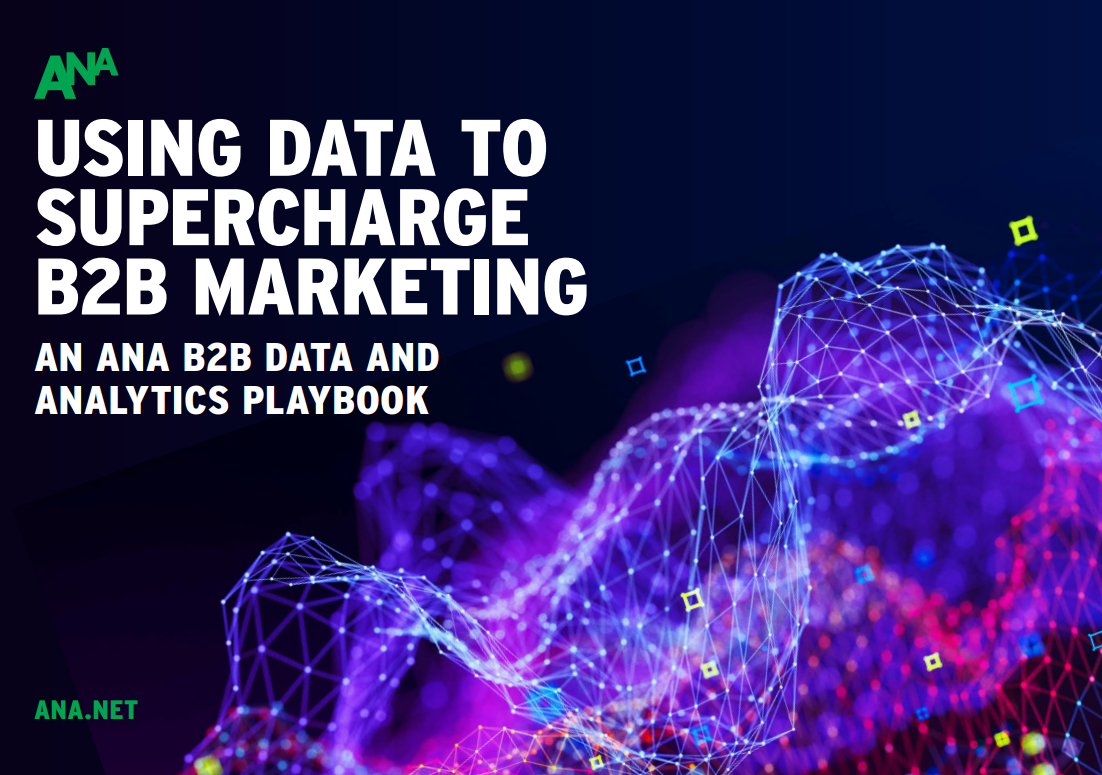
The B2B Analytics Playbook recently published by the Association of National Advertisers, “Using Data to Supercharge B2B Marketing,” has a specific section on how to identify target and hidden buyers together, compiling them into decision committees using marketing and sales data. This process can be applied to both prospects and existing B2B customers. The resulting insights can be used in marketing campaigns and then shared with sales in the form of detailed individual profiles so that salespeople understand what is driving buying decisions and the mental models the committee uses to evaluate your products and services. Creating these profiles is another section of the playbook, which draws on techniques from health care -- where models and synthetic data are used to profile individual patients and develop individualized treatment plans. In this case, we profile B2B buyers and develop individual outreach plans. This final state of B2B analytics is called relationship intelligence.
Creating these two “data products” will enhance marketing and sales collaboration and help target the right accounts, leading to more effective campaigns and outbound sales/prospecting. Aligning sales and marketing is crucial for maximizing your business’s potential.
To learn more, download the B2B Playbook -- Using Data to Supercharge B2B Marketing: An ANA B2B Data and Analytics Playbook -- and start identifying hidden buyers, modeling decision committees, and turning insights into impact.
For a deeper dive, join us at the ANA Masters of Data Conference and attend the in-person B2B Data Excellence Lab focused on applying decision committee insights to real marketing strategies, August 11-13, 2025 in San Diego, CA.
References:
Edelman & LinkedIn. (2025). “B2B Thought Leadership Impact Report.” Edelman. https://www.edelman.com/insights/hidden-buyer-b2b
Kotler, P., Rackham, N., & Krishnaswamy, S. (2006, July-August). “Ending the war between sales and marketing.” Harvard Business Review. https://hbr.org/2006/07/ending-the-war-between-sales-and-marketing
Posted at MediaVillage through the Thought Leadership self-publishing platform.
Click the social buttons to share this story with colleagues and friends.
The opinions expressed here are the author's views and do not necessarily represent the views of MediaVillage.org/MyersBizNet.

David Fogarty
David Fogarty is currently the SVP, Practice Lead of the Data Excellence and Privacy Practice at the Association of National Advertisers. Before this David was the CEO and principal of Global Decision Science Enterprises which is a digital transforma…