Think Influencers for Gen Z Reach and Engagement
Celebrities were once marketers' automatic go-to for endorsement. However, in the age of social media, their influence is waning across generations, with Gen Z sending marketers back to the drawing board by looking to influencers as brand ambassadors.
New Rules for Advertising Sales: What Leadership Looks Like in 2030
The decade ahead will compress centuries of transformation into a single cycle. AI will not replace media professionals -- it will expose who has mastered the human traits that machines can’t replicate.

Exhibits & Tools: Operationalizing Proof
Strategy without tools is philosophy. Tools without strategy are noise. What converts ambition into achievement is design -- systems that make proof practical.

Checking the New Nielsen Currency Against Two Other Sets of Evidence
I’ve just compared raw big data, passive portable peoplemeters, and the new Nielsen currency based on panel plus big data. All three sources of data show exactly the same trend lines over time. There is no denying that the linear television audience is declining at the rate shown in currency. Even better: when streaming is included, the decline in total use of television sets is minimal. And even that minimal decline is counterbalanced by the increase in watching television on other devices. In other words, the television audience is as strong as it ever was before. All of the shakeup is musical chairs during an inevitable historic shift to all-digital delivery through wires, cables, and the air.

The Leadership OS: Building Proof from the Inside Out
Every organization has hardware -- people, products, platforms -- and software -- values, culture, and habits. But few have an operating system that aligns both.
Feeding the Human Spirit: How Kroger Precision Marketing Powered by 84.51° is Navigating Data, AI, and Humanity in Retail Media (Video)
In today’s rapidly shifting retail landscape, where data and artificial intelligence power the future of marketing, one guiding principle stands out: “Feeding the Human Spirit.” That’s the guiding principle of Kroger Precision Marketing Powered by 84.51° (KPM), the data sciences and insights arm of Kroger, and it sets the tone for a deeper conversation between host Jack Myers and Senior Vice President of Kroger Precision Marketing, Christine Foster. In their 25-minute “Profiles in Leadership” interview, Foster lays out how data science, clean-room technology, and human-centered marketing are converging in the business of retail media and loyalty marketing.
Advertising Sales Playbook: Changing Minds in a Proof Economy
Every transformation begins as a perception problem. You can’t sell the future until people can imagine it.

Culture Isn’t New. But It’s Time We Treat It Like a Discipline.
Marketers love to talk about “culture.” It’s one of those words that feels both essential and elusive -- a term that can sound as soft as it is powerful.

How the Proof Economy Looks in Application
The future of media sales will not be defined by theory but by application. Across industries -- entertainment, retail, technology, multicultural, and purpose-driven media -- the most successful organizations are already embodying the principles outlined in this book: empathy, flexibility, trust, and co-intelligence.

Risk & Continuity: Turning Volatility into Value
Every era of change exposes two kinds of companies: those that react to risk and those that reframe it. Between 2020 and 2025, volatility became the norm -- economic turbulence, talent turnover, political polarization, measurement resets, and the rise of AI as both disruptor and dependency.

Why TV and Social Work Better Together for Emerging Brands
For years, TV was the mountaintop of advertising -- powerful, premium, and pretty much off-limits for anyone who didn’t have a Super Bowl budget. Social, on the other hand, gave every brand a megaphone. It was fast, simple, and measurable. You could launch a campaign in an afternoon.

The State of Media Agency Trust in 2025: Transparency, Responsiveness, and Results Define Value
The Myers Report 2025 survey reveals how media agency professionals are redefining success in an AI-driven, converging video marketplace -- and what media sellers must do to compete.
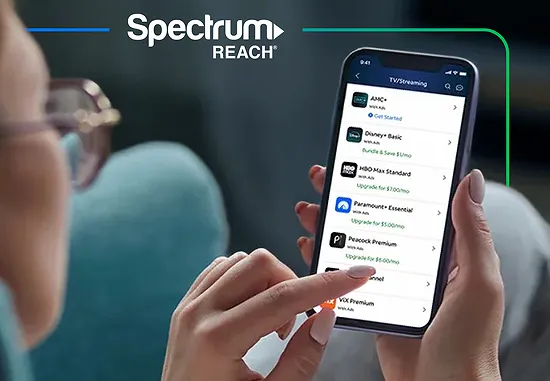
Integration is the New Scale: How Seamless Entertainment Unlocks Expanded Opportunities for Advertisers
At a recent event in New York, Spectrum introduced the new Spectrum App Store, a digital marketplace where Spectrum TV customers can activate, manage and upgrade streaming services, including ad-supported Disney+, Hulu, ESPN Unlimited, HBO Max, Paramount+, Peacock, AMC+ and more - all of which are included with select video plans at no extra cost to customers. This advancement is the latest evolution in Spectrum’s move to provide its customers with Seamless Entertainment - a simplified way for our customers to experience their favorite streaming apps and traditional TV, all in one place.
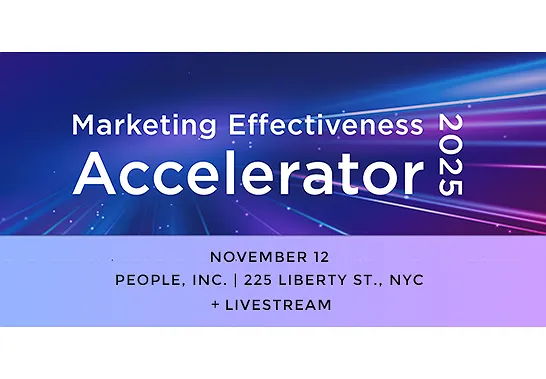
At ARF, Marketers Are Pointed Back by AI to Reach and Frequency
At The Advertising Research Foundation’s (ARF’s) 2025 Marketing Effectiveness Accelerator Conference, the number of times that reach and frequency were mentioned by expert presenters was noticeable. This is the premier conference of every year focusing on the measurement of the sales effects of advertising. Up until this conference, for several years, the concept of reach and frequency has been held up by self-interested parties to be “vanity metrics” as compared with the all-important outcome metrics. This conference sets the record straight: outcomes depend to a very large degree upon the pillars of reach and frequency. The new measurement systems, largely driven by AI, make these facts inescapable.


How Trust Became the Advertising Currency
By 2026, every media company is selling the same thing: outcomes wrapped in evidence. The asset is no longer just the ad -- it’s the assurance that the ad worked.

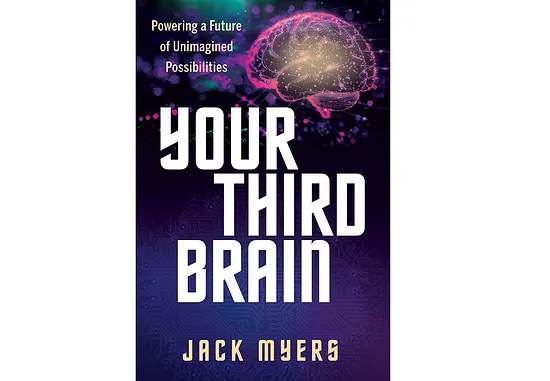
Experience the Future of Leadership - Schedule a “Your Third Brain” Learning Tour Conversation
Jack Myers’ Your Third Brain Leadership Briefing is now on tour -- an immersive conversation on the new rules of leadership in the AI era. From emotional fluency and adaptive thinking to generational intelligence and co-intelligent strategy, Jack translates decades of experience advising General Motors, TJX, Disney, Paramount and others into actionable insights for leaders preparing their teams for the future. Jack’s Learning Tour brings his Blueprint for Leadership in the AI Era directly to organizations, universities, and leadership forums globally. Invite

The Market Reality Check: From Compression to Proof
By mid-decade, the industry reached an uncomfortable equilibrium. Everything works -- and nothing works the way it used to.

The Gracenote Census of World Video Content Fuels AI
In my September 10 post, I reported using Nielsen data that “Looking at Magna numbers for 2025, total U.S. ad spend in 2025 on all video combined will be $111.1 billion out of a total of $397.7 billion, making video only about 27.9% of total ad spend. This seems somewhat absurd when compared with the data above, which shows that video captures 57.7% of time spent with electronic media.”