
Programmatic Linear Television Is Here!
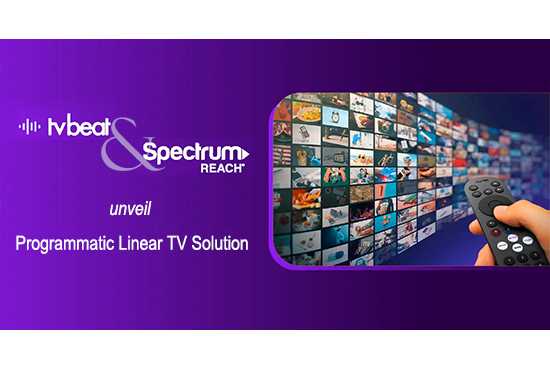
Although low CPM has been the main driver of digital ad spend’s meteoric growth, the ease and data-first aspect of programmatic has been a strong second factor. For years we’ve urged that television’s ROAS value was constrained by not being programmatic, and we’re thrilled to show that programmatic television at scale is finally a reality.
Several players were instrumental in the dawning of this day: AMC, with Freewheel, The Trade Desk, and Canoe went live with programmatic linear TV in October, 2023; Comcast’s Universal Ads launched in January 2025 and is programmatic for CTV/OTTads; and most recently and comprehensively, Spectrum’s linear TV is already being sold programmatically today in all of its 91 U.S. markets, as announced on August 12.
The backbone of Spectrum’s ability to deliver programmatically is “tvbeat”, a global leader in Total TV campaign forecasting, planning and optimization that serves 40 major television publishers in nine countries, including Sky (owned by Comcast).
tvbeat is also in many ways the US market leader, having a fully operational ability to deliver linear and cross-platform programmatic solutions, and unifying the currently siloed pools of linear, streaming, MVPD addressable, MVPD VOD, ATSC 3.0 (NEXTGEN TV), and other digital inventory into a single portfolio.
The Association of National Advertisers has strived for years to bring down the high middleman costs of programmatic and recently announced with deserved pride that the average programmatic middleman cost today is 59% of the media spend. tvbeat delivers programmatically at a single digit fraction of that cost.
tvbeat has also recently announced, with partners RMT and BHC (both companies in which I am a principal), a new platform based on tvbeat and RMT’s Value Signals Resonance technology called UltiMedia, which facilitates programmatic selling and buying while optimizing ROAS for increased revenue to all parties.
UltiMedia pools selected inventory from participating premium publishers and applies frequency capping at the campaign level, using addressable TV to fill in missing reach and insufficient frequency, effectively solving the problem of excessive frequency at long last while also increasing the value of the recommended inventory.
Audyns is another new company which has realized the value of pooling of inventory, which it is achieving out of the gate across REELZ, fetv, Great American Media, and TelevisaUnivision, and undoubtedly many more to come. Both Audyns and datafuelX,the platform that Audyns will be using to execute its campaigns, have also joined UltiMedia.
TVB has announced that it is leading an effort to make programmatic available across all of local linear television in 2026.
Many local television station groups have offered programmatic solutions for their digital inventory in the past few years, including Sinclair, TEGNA, Nexstar, Gray Media, NBC and Telemundo station groups, and Fox Stations. Others offering programmatic solutions for digital inventory include Wide Orbit, ITN, Magnite, and O N X (The Omnichannel Network Exchange).
It’s possible that some, if not many, of these parallel efforts will consolidate.
This is a major movement that has the potential to cause the next seismic shift in the volatile media and advertising industries. I’ll be on a panel at the CIMM Summit in New York on September 16, 2025 with RMT president Audrey Steele, TVB EVP Brad Seiter, and Audyns Co-Founder Todd Gordon, where we will address these new developments and open the floor to audience questions and commentary.
Much of the advancement in successfully making linear TV programmatic should be credited to unsung hero Brian Wallach, who championed the idea at Freewheel and in his consulting role for tvbeat. Brian is now an advisor to UltiMedia and to RMT as well.
I know how hard it is to do something good for the industry. The first programmatic TV system was my Next Century Media deployed in the 90s by TCI and other major MVPDs for addressable TV. The next generation of linear – and cross platform – programmatic has been a long time coming and I believe all sides of the industry will be better for it.
Posted at MediaVillage through the Thought Leadership self-publishing platform.
Click the social buttons to share this story with colleagues and friends.
The opinions expressed here are the author's views and do not necessarily represent the views of MediaVillage.org/MyersBizNet.

Bill Harvey
Bill Harvey, who won an Emmy® Award in 2022 for his invention of set top box data, has spent over 35 years leading the way in media research with pioneer thinking in New Media, set top box data, optimizers, measurement standards, privacy standards, the A…