
Two Valuable Days at ARF AxS 2026
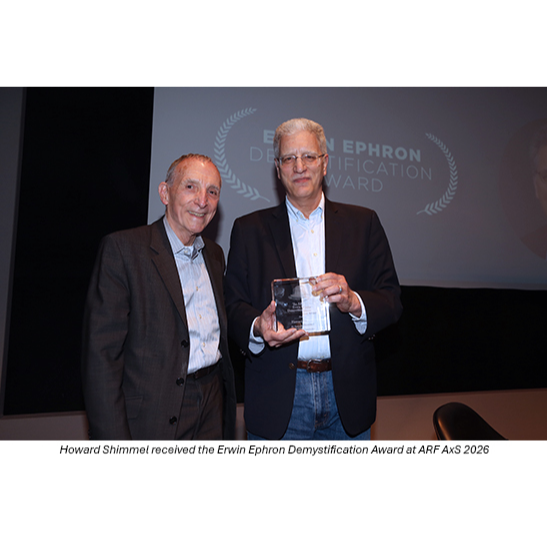
Two mind-altering keynotes. Another installment of the ARF Attention Validation study and many well-chosen breakout sessions upholding the importance of context effects and how attention fits into a more complex picture of attention, emotion, motivation, and behavior. A visionary new product from Nielsen. How AI is changing everything, according to everybody, and most usefully by Shelly Palmer. A look back at ARF’s accomplishments on its 90th birthday. Honoring the late Radha Subramanyam. Awarding Howard Shimmel the Erwin Ephron Demystification Award. On the measurement front, a twice-recurring theme of industry pitching in to create great things together.
It was the Advertising Research Foundation’s annual AUDIENCExSCIENCE conference hosted by People, Inc. in their stylish New York City quarters. Bob Lord, President of Horizon, was the Day One Keynote speaker. He predicted that some agencies would arise again as the trusted growth partners of advertisers in sharp contrast to their current status as vendors. These would be agencies with unified and open technology systems. He described these both as operating systems and as learning systems. He proposed that marketing become integrated into the Enterprise Resource Planning (ERP) system.
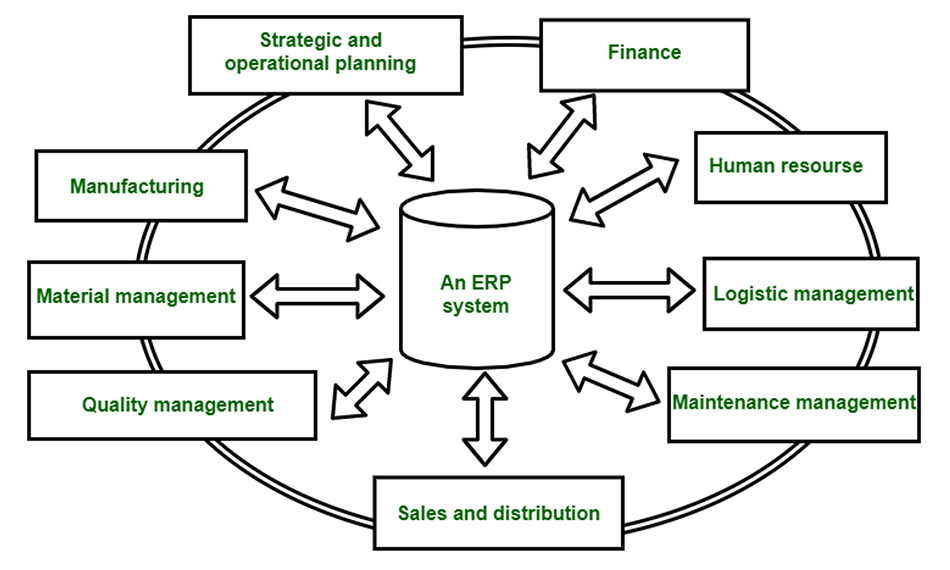
By “open” he meant collaborative and able to accept new technologies they themselves had not invented. He advised us all that explainability is almost as important as results. Without explainability there is no guarantee that good results can be repeated. And that results must be the universally accepted results of the CEO, CFO, Wall Street, i.e., growth as measured by money, not by vague proxies.
On Day Two the opening Keynote address was given by the inimitable Laura Martin, Senior Internet & Media Analyst at Needham & Company, on Wall Street’s View of the Ad Industry. Laura has spoken before at these ARF conferences and once again she shook up the minds of the audience. She painted a picture of how four American technology companies are rising to world dominance: Google, Meta, Amazon, and Microsoft. They are all betting on AI, and Wall Street, she reported, is betting on them to be right.
She raised some doubt as to the future of advertising by discussing the use of agents by consumers to find the best things to buy and to get them delivered. A post by Shelly Palmer I had read the day before reported a prediction by Cloudflare CEO Matthew Prince that AI bot traffic on the Internet would exceed human traffic by 2027. Laura appeared to be of the same view that the funnel would collapse and humans would no longer participate in brand selection. She implied that brands themselves might no longer be necessary.
Personally I do not see that happening. Status/Prestige would also have to disappear as an RMT subconscious Motivation for brands to become obsolete. Also the RMT Need State of “Perfectly Made” would have to disappear. Human subconscious Motivations and Need States are probably not eradicatable by outside forces short of psychotronic technology capable of a new level of super lobotomy. The effects of the modern mediasphere have to a large extent shaped who we are and how we use our brains so this is a scenario not to be ignored as a dystopic possibility.
Laura noted that Wall Street decides what is going to happen next in our business based on the belief that the ad revenues will and should follow time usage by media types. I was going to raise my hand to comment on this belief, but someone else beat me to it. Time spent, unless it is related to ROAS, is not the proper determinant of allocation of ad budgets. In fact, right now the allocation of ad budgets is far out of line with time spent, as shown in my article on the subject. Today, video gets 58% of time spent and only 28% of ad spend.
Consistent with prior phases, Phase 3 of the ARF Attention Validation Study finds that attention metrics are not directly interchangeable across suppliers and show the strongest alignment at the broad channel level, with weaker agreement at more granular levels such as platform and placement. The ARF therefore recommends using a consistent attention measurement provider or methodology across campaigns. Across the campaigns studied, television and YouTube/OLV generally received substantially higher attention scores than social media, but higher attention did not consistently translate into stronger brand lift. In some cases, lower-attention environments still delivered stronger lift, likely due to factors such as media weight/impression volume and non-skipability. That is, even though attention was lower for social platforms, if given enough media weight, social platforms also showed significant brand lift.
This dissociation of attention from business results was also found in the Kantar breakout session where Deepak Varma, Head of Neuroscience, Kantar, reported that the more brain resources are used for attentiveness, the less brain resources are available for emotion, and showed data that confirm what many others have said before, that it is better to have some attention than none, but that the quantity of attention is not always an improvement and can be an obstacle. Dr. Richard Silberstein has also observed that attention can be a sign of skepticism.
Emotion, on the other hand, is clearly essential for advertising to work. If one does not care, there will be no behavior change. Only about 15% of faces show emotion in the use of facial emotion recognition, so those other 85% of faces might cover emotional reactions that are unmeasurable by that methodology. Obviously, we do not always show facial emotion, and why we do it is often to reduce the effort it takes to communicate with other humans. I would also say that “feelings” is a better word to use than “emotions” because it is more inclusive of what marketers mean by the word “emotion”, which tends to also include values, motivations, mindsets, and all the other non-rational and subconscious “stuff” that goes on.
I presented for RMT with our partner, Dr. Michael Platt, Director of Wharton Neuroscience/AI. McKinsey’s finding that 70% of CEOs judge marketing success based on year-over-year (YOY) brand sales growth, and the tendency to lower media budgets 20% in this period of global uncertainty, point to the need for a breakthrough in marketing science, and we believe we have one. It is the mixture of big data, neuro, AI, and empirically-derived content coding which enables us to guide the placement of any given ad into the environments and to the persons causing the greatest sustainable YOY brand sales growth. Of all of the sessions I attended, ours was the only one placing so much importance on sales effect, and showing as much proof data based on real in-market sales results. Presentation available here as a PDF or here as slides.
Nielsen made two-stage appearances at the conference. In the first, ARF CRO Paul Donato conducted a fireside chat with Nielsen CRO Pete Doe. One of Paul’s first questions was about the industry’s concerns about the change in currency. Pete pointed out that the differences in the numbers fell as expected well within statistical tolerance ranges, in fact the laws of statistics would have predicted that more and larger changes would have occurred, yet he empathized with those networks whose numbers went down (our own analyses show that the hardest-hit networks, averaging a 0.02 rating, went down an average of 0.004% of one rating point). When asked about Nielsen ONE, measuring TV, CTV, computer and mobile together, Pete reported that N1 is in good shape, clients are using it for advanced audiences at the persons level, measuring not only reach/frequency but also outcomes in terms of brand lift and sales lift all through one planning, buying, and postevaluation dashboard – echoing the ideas of Bob Lord for unification of platforms.
In the Nielsen breakout session, Pete and Nielsen SVP Data Science David Kurzynski co-presented STAR, Synthetic Total Audience Ratings, a new Nielsen system for further improving its CTV measurement based on big data plus Nielsen’s exclusive streaming meter. The system captures sub-minute viewing of both content and ads on all devices – TVs, phones, tablets, desktops, and laptops. It uses Gracenote for metadata and addressable ad logs, enabling true addressable measurement where applicable.
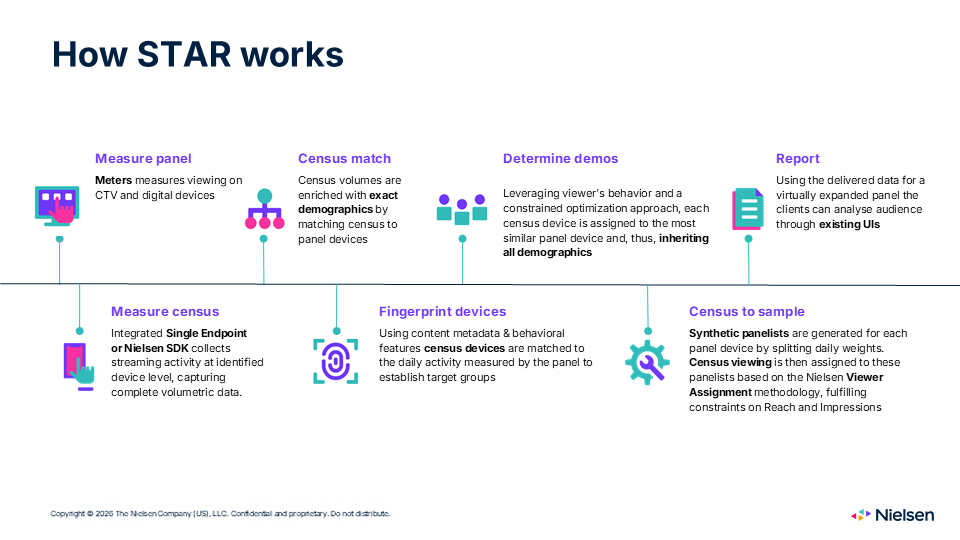
I see the system as visionary because it explicitly encourages streamers to contribute their data to the measurement system. ANA’s Aquila system similarly encourages data contribution to their smaller hub aimed at reach frequency modeling across platforms. In the future, more and more of the data needed will be held by the media themselves. How they contribute or do not contribute (=walled gardens) their data to the industry systems will determine the future of audience measurement.
Nielsen’s STAR system is not dependent on getting these data contributions, although there are already over 20 major national media platforms contributing data through integrations with Nielsen. STAR will simply get better and better the more that its synthetic data is replaced by real data. Nielsen only uses synthetic data as a last resort; many others use much more synthetic data than Nielsen (including Aquila, because the walled gardens will only release synthetic, or highly aggregated and selected data). Nielsen’s use of walled garden data makes maximum use of verifiable data and advanced data science/machine learning to force-fit synthetic data to real data, as reported here.
The ARF like a fine wine gets better and better with age.
Our new podcast explores the topic of Being in the In-between Phase, a liminal stage of growth when we can feel disoriented, lonely, or frustrated, and why it’s also a powerful indicator that real growth is happening. Rather than rushing to “fix” the discomfort, this episode invites listeners to slow down, listen more deeply to themselves, and learn how to navigate uncertainty with trust, patience, and self-awareness.
This month’s podcast length is ≈46 minutes. Watch the Video
Posted at MediaVillage through the Thought Leadership self-publishing platform.
Click the social buttons to share this story with colleagues and friends.
The opinions expressed here are the author's views and do not necessarily represent the views of MediaVillage.org/MyersBizNet.

Bill Harvey
Bill Harvey, who won an Emmy® Award in 2022 for his invention of set top box data, has spent over 35 years leading the way in media research with pioneer thinking in New Media, set top box data, optimizers, measurement standards, privacy standards, the A…