
Understanding What Drives Successful Advertising
Advertising is a complex field, and many practitioners—whether in creative roles, media planning, or executive leadership—are still exploring, without clear success, what truly makes it effective. Over the years, much of the industry’s approach has been shaped by tradition and established practices, many of which are insufficient or outdated. However, recent advances in neuroscience and cognitive science are offering new perspectives that can help deepen our understanding of how advertising works.

Confidence is the New Competitive Advantage in B2B Marketing
B2B marketing is in the middle of a reset, driven less by hype cycles and more by a deeper shift in how companies grow and how buyers make decisions. We’ve seen that transformation up close, partnering with CMOs and B2B marketing leaders navigating it. One finding from our new ANA and NewtonX research stopped us cold: Even the most senior marketing leaders at the world’s biggest companies still wrestle with the same core challenge.


Adapt or Die: How Strategists Can Rule the Sky - Learnings from Stratfest 2025
In a world where strategy risks becoming formulaic, StratFest 2025 was the jolt that reminded us what bold evolution looks like.

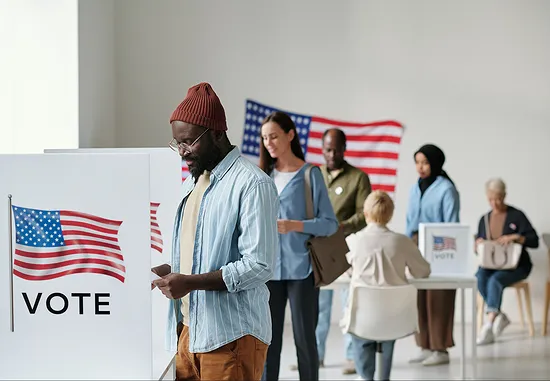
Political Advertising’s Coming AI Transformation
Predictions about ad spend on the 2026 Midterm elections are rolling in. Global agency Assembly recently forecast total spending of $10.1 billion. AdImpact, a major data and forecasting source, is projecting $10.8 billion - up 21% vs. 2022 and just shy of the record $11.2 billion spent during the 2024 presidential election cycle.

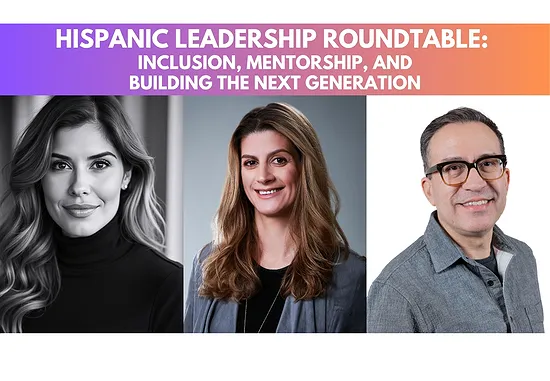
Hispanic Leadership Roundtable: Inclusion, Mentorship, and Building the Next Generation (Video)
In celebration of Hispanic Heritage Month, leaders from media, marketing, and advertising came together for a roundtable discussion about the state of inclusion in the industry, the role of mentorship, and the responsibility to prepare the next generation of leaders. Panelists included Maria Teresa Hernandez, Head of Strategic Partnerships and Inclusive Growth at Rembrand; Raul Rios, Head of Strategy at Saylor; and Marina Filippelli, CEO at Orci.


The Universal Signal: How Resonance Drives Connection
Advertising campaigns and even peace talks between opposing groups share a surprising requirement: resonance. Without a genuine connection between the message and its audience, neither persuasion nor reconciliation can truly take hold.
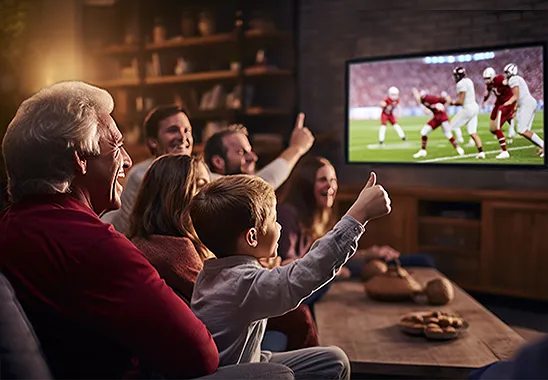
Big Data and Nielsen Agree on the Rate of Linear Decline
In my August 27 column, I reported on the biggest shift in US TV audience measurement methodology in history. The panel method has been the basis for currency used in transactions since the dawn of television, not only in the US but in at least 40 other countries. In most other countries, this is still the case. In the US, Nielsen (a consulting client of mine), with clients and MRC on board, and after years of the industry looking at parallel sets of data, switched the currency to panel + BD (big data) this year, as planned and collectively agreed to. Obviously, a handful of people objected to this because getting everyone to 100% agree on anything is impossible, as Abe Lincoln pointed out long before television.

Broadcast Lessons from Kimmel and Colbert: Power. Passion. Pride.
The term "game-changing" is egregiously overused of late, especially in advertisements on social media. But it seems to me that recent late-night broadcast programming has the potential to be exactly that. I have nothing new to add to the ongoing free speech conversation (or is it a "confrontation?") that you haven't read, said, or thought about since Stephen Colbert got the boot on CBS and Jimmy Kimmel got temporarily tossed off ABC. The latter "cancellation" was quickly reversed amid the clamor of the masses in defense of every American's 1st Amendment rights.

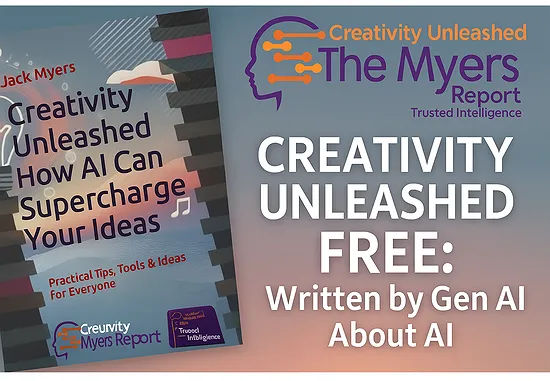
FREE from Amazon Kindle: AI Tools, Tips & Ideas for Everyone. Written by AI
Let AI unlock your creative potential! Creativity Unleashed offers 100+ practical tips, tools, and ideas, written by AI and curated by Jack Myers. Order the Kindle edition FREE on Amazon today! Based on surveys among students, creators, educators, parents, and business professionals, more than 100 AI pain points, questions, and objectives were identified.


"The Morning Show" Season 4 Review: Not Great, Not Terrible, Just Fine for Now
Apple TV+’s The Morning Show is back for its fourth season, picking up two years after the events of the Season 3 finale and setting the stage for another round of media melodrama. As past seasons have covered the #MeToo movement, cancel culture, COVID and the January 6th Insurrection, this season tackles the looming influence of AI in entertainment, climate change protests, and... The first two episodes quickly establish where the characters have landed after the time jump, but in doing so, it spreads itself thin across half a dozen storylines, leaving the episodes feeling more like a reset than a confident step forward
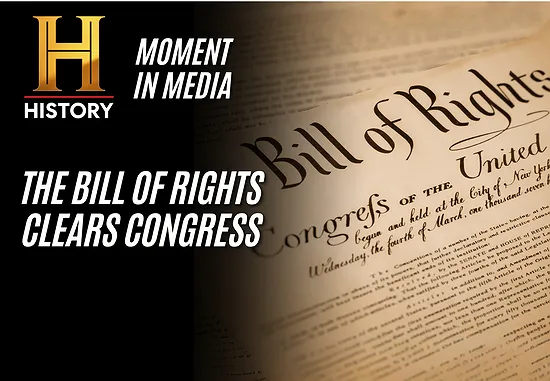
HISTORY’s Moment in Media: The Bill of Rights Clears Congress
The U.S. Constitution was drafted during the notoriously hot summer of 1787 and signed by delegates to the Constitutional Convention in Philadelphia on September 17 of that year. Delaware was the first state to approve it, in December, and it went into effect on June 21, 1788, when New Hampshire became the ninth state to ratify, the threshold required to make the new governing document legally binding.
It’s Still Very Hard to Get Reach Without Linear TV
In April 2023, I reported a Nielsen ONE finding that linear TV alone can reach 60% of American adults 25-54, an achievement that other media types measured by Nielsen ONE could, on average, not do on their own. CTV campaigns on average could reach 16%, mobile 31%, and computer 8%.

How GEO Optimization Is Redefining Tech and Financial Communications
Search is no longer defined by keywords alone. Today, when people ask questions about brands, products, or industries, the answers are increasingly delivered by AI engines. These responses are not pulled from a single website but synthesized from multiple sources that algorithms deem credible. For leaders in communications, this shift represents both a challenge and an opportunity. Traditional PR and SEO strategies, while still essential, are no longer enough on their own to guarantee visibility or accuracy. A new layer has emerged that ensures brands are understood and cited in the places where audiences are searching. That layer is GEO optimization.
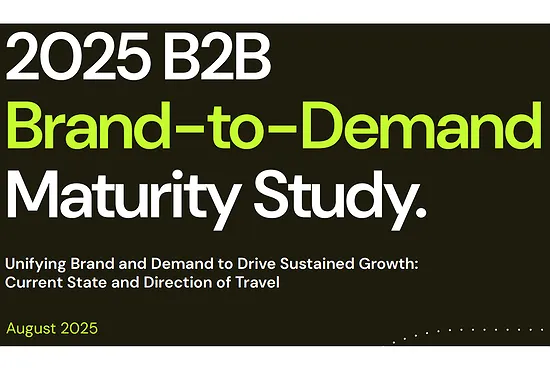
CFOs and B2B Marketers Are Aligned on Growth, But Not on Brand
In B2B companies, CFOs and marketers are often at odds over brand. Marketing leaders push for investment in awareness, storytelling, and reputation-building, while finance executives question the tangible return on those dollars. The reality? They are not in conflict -- and actually want the same outcome: faster, more profitable growth. The difference is perspective -- marketers frame brand as trust and consideration, while CFOs seek risk reduction, sales efficiency, and margin protection. Bridging that language gap reveals that brand is not a cost center, but a strategic driver of demand. Data from LinkedIn shows that coordinated brand and acquisition messages are six times more likely to convert than those exposed to demand media alone.

Why Brands Must Engage With Culture. Here’s How to Do It Without Getting Burned.
In a world of commoditized products, global competition, and consumer skepticism, culture is what distinguishes a brand from “just another option.” And yet, staking a claim in culture feels more dangerous than ever. The fiery debates over jeans, celebrity spokepeople, logos, etc. etc. show just how volatile cultural engagement can be. Marketers wonder: is it worth the risk?

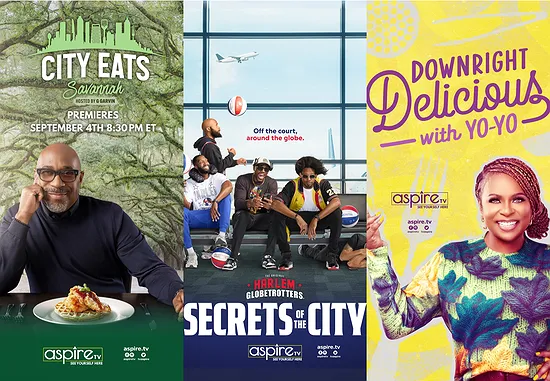
AspireTV’s Fall 2025 Slate Celebrates Food, Culture, Legacy, and Storytelling
When aspireTV launched in 2012, its mission was clear: to provide a platform that highlights positive cultural references centered on Black life, culture, and stories. As Angela Cannon, UP Entertainment’s Executive Vice President, Networks and Content Strategy & General Manager of aspireTV, explained that commitment has only deepened over time.
Local/Regional TV Advertising Outlook (2024 actuals, 2025 actuals, 2026 forecast)
Here’s how it looks from the courthouse steps of Localville, USA. The car dealer who swore by the 6 p.m. news still wants “tonight,” but he also wants the two households who already cut the cord and the four who only open YouTube on the living-room screen. That tension, between habitual reach and addressable reality, is exactly where local broadcast and local cable now compete for every incremental dollar.

From Launch to Loyalty: The Role of PR in Beauty Brand Success
In the beauty industry, the sheer number of products introduced each year creates both opportunity and risk. Launches can generate short-term excitement, but sustaining that momentum requires more than clever packaging or advertising spend. The key to transforming awareness into long-term loyalty lies in public relations. Beauty PR agencies are the partners that help brands shape stories, build credibility, and connect with consumers in ways that advertising alone cannot achieve. For companies seeking to stand out, a strategic relationship with a beauty PR firm can become the foundation for growth.

Why Showing Up Matters More Than Ever
Each September, we are reminded of how much energy and hope lives in a new school year. Unfortunately, not every child starts with the same tools. For some families, even the basic essentials like pencils and notebooks are out of reach.

Why B2B PR Agencies Are the Hidden Growth Engine for Today’s Businesses
Public relations is often viewed through the lens of consumer campaigns: splashy launches, viral stories, or influencer buzz. Yet in the business-to-business world, the impact of public relations is equally critical, if not more so. B2B companies operate in competitive, specialized markets where credibility and trust drive growth. In this environment, a strong relationship with a B2B PR agency can make the difference between remaining unnoticed and becoming a market leader.