The relationship between marketers and creators is changing, and brands are beginning look beyond macro influencers like Emma Chamberlain and Jake Shane. They have massive Gen Z followings and can generate viral moments, but partnering with them can be expensive. The focus is moving toward building sustainable relationships with smaller creators whose credibility, authenticity, and consistency can drive ongoing engagement. This ongoing evolution clears the way for partnerships with micro creators that build long-term brand equity.
Accordingly, creators are reevaluating what their partnerships are worth. They’re looking at direct compensation, but also brand alignment, campaign duration, and creative freedom. The rules of engagement are rapidly being rewritten.
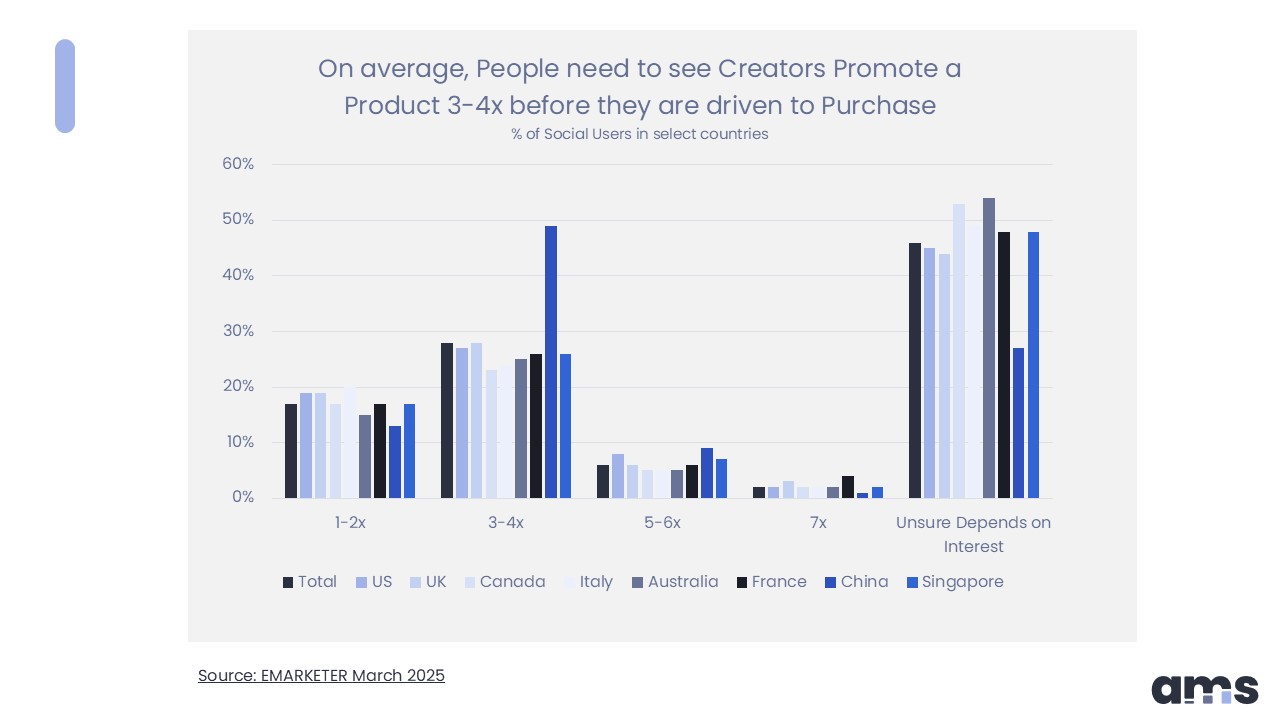
According to EMARKETER, it takes an average of three to four promotions by a single creator to effectively drive purchases for brands. Many marketers already request multiple types of content from creators, and these findings could determine how future campaigns are structured.
Creators are also exercising more bargaining power, and their influence (as defined by their engagement and reach) increasingly strengthens their negotiating leverage. Creators who have more meaningful connections with their audiences are more valuable, and they know it.
To offset upfront costs, some brands are experimenting with hybrid compensation models that include both payment and company equity for mega (1M+ followers) and macro (500K-1M followers) influencers. While this aligns long-term incentives, it can also distance these creators from their audiences and erode credibility as they increase their net worth and more business savvy.
This dynamic emphasizes why micro and nano influencers often foster stronger loyalty. As Rakuten advertising notes, “...micro-influencers [5k-100k followers] do not feel like faceless brands or overly polished celebrities. They are authentic, relatable, and deeply connected to their audience.”
Brands looking for authenticity and engagement find micro influencers increasingly appealing. Linqia, for instance, reports that 62% of marketers plan to work with micro influencers in upcoming campaigns. Their smaller social footprints are a positive trait, enabling them to offer a direct path to deeply engaged and trusting followers, niche though they may be.
Micro partnerships are proving effective: Viral Nation finds that smaller influencers can boost sales by 20% and can yield ROIs more than four tikes higher than larger-scale campaigns. They also present fewer brand-safety risks since they tend to maintain a cleaner reputation and closer audience relationships.
The recent EMARKETER Summit held in New York City this past September emphasized the need to evolve influencer strategies to meet changing audience expectations. Sponsored social spending is expected to hit $10.5 billion by the end of 2025, with steady growth year anticipated to continue in the coming years.
During Advertising Week 2025, I spoke with Katie Feeney, a mega sports, travel, and lifestyle creator, about the evolving nature of brand-creator relationships. She emphasized the value of long-term brand deals:
“On both the brand side and the creator side, building a relationship builds authenticity. It is also helpful when you work with a brand for a long time; they get to know you both as a creator, but also as a person. What you like, what you do not like, what works, what does not work … it is more so just from an authenticity standpoint, and transparency is huge between an audience and a creator.”
Feeney also discussed how pacing matters for brand collaborations. Brands are moving away from demanding deliverables all at once and toward staggered, ongoing content staggered flighting strategies:
“I always try to spread sponsored content, but mixing in as much organic content as possible is what creates the best of both worlds for the brand, the creator, and the audience.”
Her perspective reflects a broader trend where brands and creators are finding their rhythm and determining what authentic collaboration looks like.
With marketers increasing their investments in the creator economy, some key questions arise:
- What are fair compensation standards for influencers?
- Should rates be based on followers, engagement metrics, or conversions?
- How should long-term partnerships be structured for mutual benefit?
The industry will establish clearer benchmarks and best practices, and we’ll see more staggered, long-term campaigns—campaigns that nurture audiences through each stage of the purchase funnel, from awareness to conversion.
The influencer and creator “boom” will continue to mature into a more strategic and mutually beneficial marketplace.
Sources:
Advertising, Rakuten. “Influencer Trends to Watch: #3 Rise of the Micro-Influencers.” Rakuten Advertising Blog, 18 Mar. 2025, blog.rakutenadvertising.com/insights/influencer-marketing-trends-rise-of-the-micro-influencers/.
Liederman, Emmy. “Brands Prioritizing Engagement, Loyalty in Influencer Marketing.” EMARKETER, EMARKETER, 29 July 2025, www.EMARKETER.com/content/brands-prioritizing-engagement--loyalty-influencer-marketing.
Jones, Marisa. “Brands Ditch Big Names for Nano-Influencers with Niche Reach.” EMARKETER, EMARKETER, 24 June 2025, content-na1.EMARKETER.com/tracking-impact-of-nano-micro-mid-tier-creators-audience-engagement.
Liederman, Emmy. “Multiple Creator Promos Drive Purchases.” EMARKETER, EMARKETER,19 Sept. 2025, content-na1.EMARKETER.com/multiple-creator-promos-drive-purchases
EMARKETER Summit Conference 9/9/2025
Katie Feeney Interview 10/7/25
Posted at MediaVillage through the Thought Leadership self-publishing platform.
Click the social buttons to share this story with colleagues and friends.
The opinions expressed here are the author's views and do not necessarily represent the views of