Two mind-altering keynotes. Another installment of the ARF Attention Validation study and many well-chosen breakout sessions upholding the importance of context effects and how attention fits into a more complex picture of attention, emotion, motivation, and behavior. A visionary new product from Nielsen. How AI is changing everything, according to everybody, and most usefully by Shelly Palmer. A look back at ARF’s accomplishments on its 90th birthday. Honoring the late Radha Subramanyam. Awarding Howard Shimmel the Erwin Ephron Demystification Award. On the measurement front, a twice-recurring theme of industry pitching in to create great things together.
It was the Advertising Research Foundation’s annual AUDIENCExSCIENCE conference hosted by People, Inc. in their stylish New York City quarters. Bob Lord, President of Horizon, was the Day One Keynote speaker. He predicted that some agencies would arise again as the trusted growth partners of advertisers in sharp contrast to their current status as vendors. These would be agencies with unified and open technology systems. He described these both as operating systems and as learning systems. He proposed that marketing become integrated into the Enterprise Resource Planning (ERP) system.
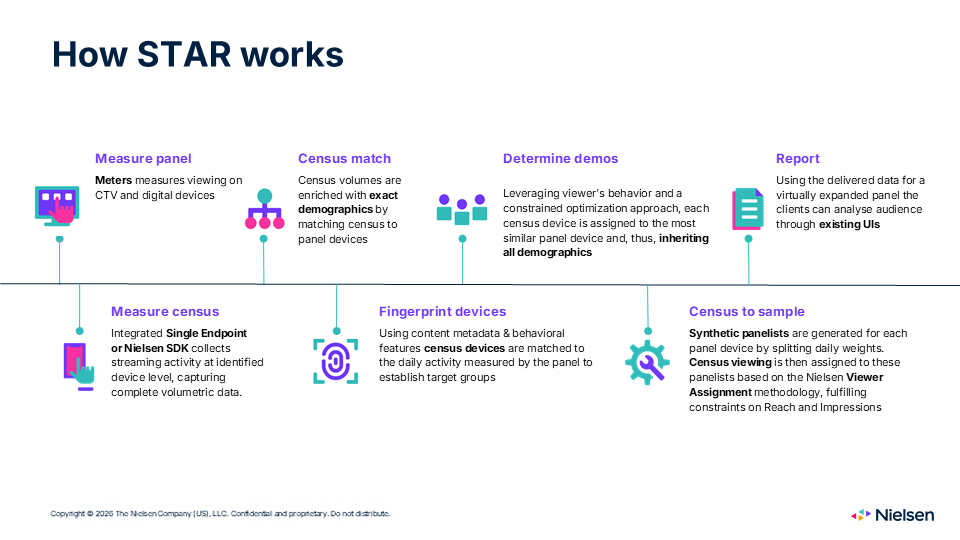
I see the system as visionary because it explicitly encourages streamers to contribute their data to the measurement system. ANA’s Aquila system similarly encourages data contribution to their smaller hub aimed at reach frequency modeling across platforms. In the future, more and more of the data needed will be held by the media themselves. How they contribute or do not contribute (=walled gardens) their data to the industry systems will determine the future of audience measurement.
Nielsen’s STAR system is not dependent on getting these data contributions, although there are already over 20 major national media platforms contributing data through integrations with Nielsen. STAR will simply get better and better the more that its synthetic data is replaced by real data. Nielsen only uses synthetic data as a last resort; many others use much more synthetic data than Nielsen (including Aquila, because the walled gardens will only release synthetic, or highly aggregated and selected data). Nielsen’s use of walled garden data makes maximum use of verifiable data and advanced data science/machine learning to force-fit synthetic data to real data, as reported here.
The ARF like a fine wine gets better and better with age.
Our new podcast explores the topic of Being in the In-between Phase, a liminal stage of growth when we can feel disoriented, lonely, or frustrated, and why it’s also a powerful indicator that real growth is happening. Rather than rushing to “fix” the discomfort, this episode invites listeners to slow down, listen more deeply to themselves, and learn how to navigate uncertainty with trust, patience, and self-awareness.
This month’s podcast length is ≈46 minutes. Watch the Video
Posted at MediaVillage through the Thought Leadership self-publishing platform.
Click the social buttons to share this story with colleagues and friends.
The opinions expressed here are the author's views and do not necessarily represent the views of