Fashion Week is the rare global ritual where imagery and fantasy becomes truly immersive and touchable. Paris delivers the cathedral version of taste, all lineage and gravitas. New York replies with velocity, pluralism, and hustle. Milan delivers proof, not poetry—the kind of craftsmanship that makes “luxury” measurable, yet magical. Across the iconic fashion meccas, you get a masterclass on how modern desire is manufactured, refreshed, and made to feel inevitable.
If you are a brand trying to survive attention scarcity, high fashion’s biggest lesson is not “be beautiful.” It is “be meaningful right now.” The runway is a ultimate pathway in building codes that can be recognized in half a second, photographed from any angle, and repeated without becoming stale. Luxury houses in Paris have perfected this for decades. They do not sell a product first. They sell a worldview that the product happens to fit inside. Gucci sells a worldview first: identity as bold performance, history remixed into spectacle. Kentaro sells fashion as performance too, but tighter and more “scored,” like clothing built to hit like a rock performance https://artheartsfashion.com/new-york-fashion-week/ onstage.
What brands should notice is howArt Hearts Fashion builds a runway week the way a smart marketer builds a campaign. It creates multiple “drops,” not one monolith. It stages atmosphere, not just garments. It understands that audience is not one single group. It is many micro-worlds that want to feel seen. When the doors open, the room itself is already doing brand work.
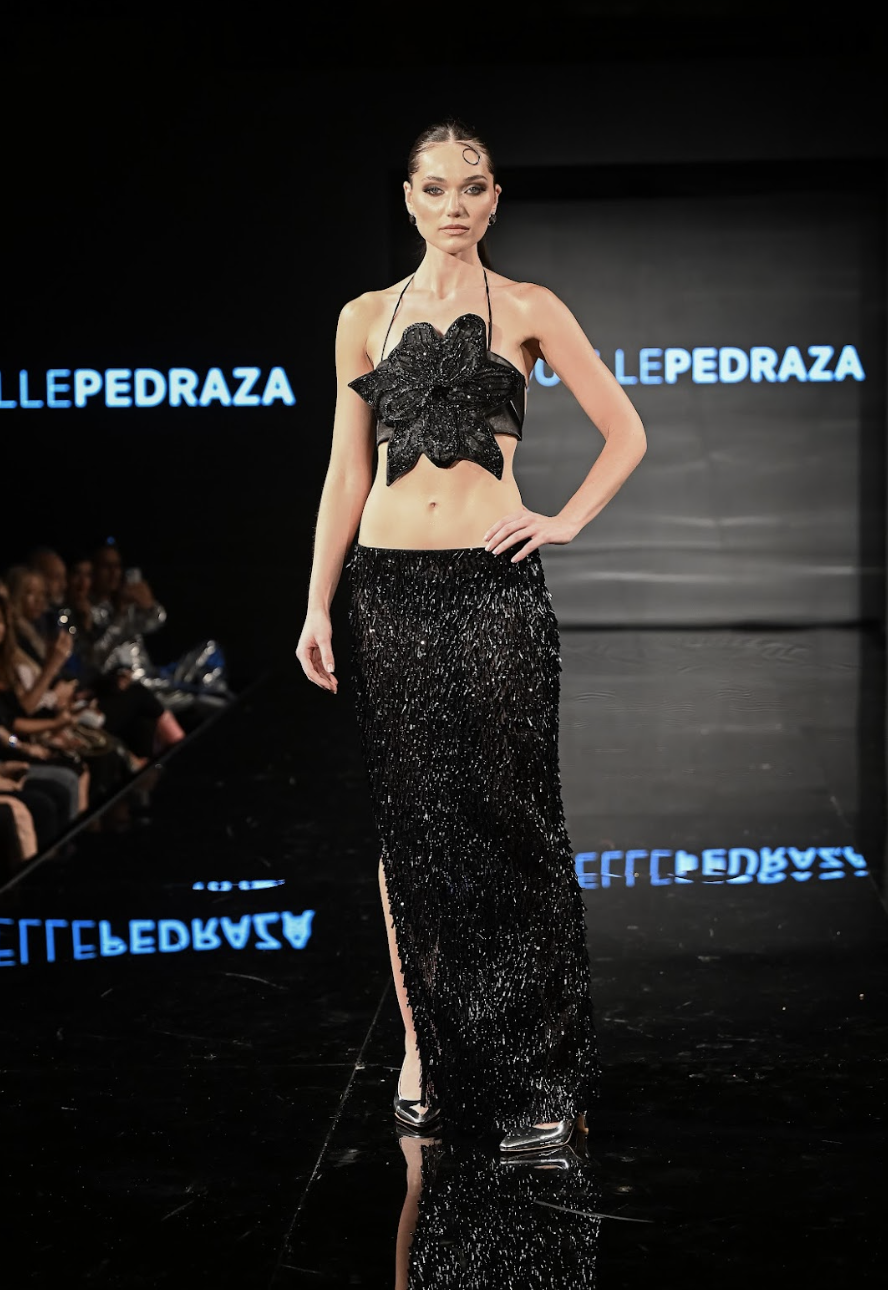
Fashion by Raquelle Pedraza
So that brings us to the first lesson:
Lesson 1: The Experience Is the Product
Traditional marketing still acts like the product is the center of the experience and everything else plays a supporting role. Fashion week flips that. The show is the product. The garment is proof. The surround sound captures the ethos and atmosphere that brings the designer's vision to life.
Art Hearts Fashion gets this instinctively. Its venues do not behave like neutral backdrops. -- they are the sets. Doors open, runway, then another runway, then a late-night peak, then a VIP Valentine’s event at Leo’s Famous. That is not filler. That is pacing. It is how you keep attention from evaporating into thin air.
Brands should steal this rhythm. Stop thinking in single launches. Think in chapters. Create reasons for people to show up again in the same weekend and make the timeline itself feel like a adventurous journey flow.
Lesson 2: Build a Visual Signature That Travels
Parisian houses win because they are instantly recognizable. Even when the design changes, the code remains. New York’s best emerging designers are learning to do the same thing, often in faster cycles and more personal ways.
Let's look at Mila Hoffman. Her couture energy is deliberate, unapologetically ornate. The point is not minimal refinement. The point is impact. Crystals, embellishment, and drama are her shorthand, and shorthand is what the modern digital communities rewards. If you are a brand, the takeaway is obvious. Pick a signature and iconic look that can survive the scroll. Do not bury your identity inside “premium" or the "imitation game".
Or take Maison Fatim, whose work is rooted in heritage and cultural elegance. That kind of design does something advertising struggles to do convincingly. It signals continuity with attitude. It says, “This is just not a trend, it is a lineage.” Brands love to talk about authenticity, but fashion shows you how authenticity is built. It is built through consistent references, materials, and story. You cannot claim heritage -- you have to demonstrate it. Importantly you have to earn it.
Then there is George Styler, whose knitwear leans into multicultural collage and bold pattern language. His lesson for brands is that “identity” does not need to be one clean, sterile thing. In fact, in 2026, it is more believable when it is layered. Today’s consumer rarely wants a single aesthetic dictatorship. They want permission to be plural.
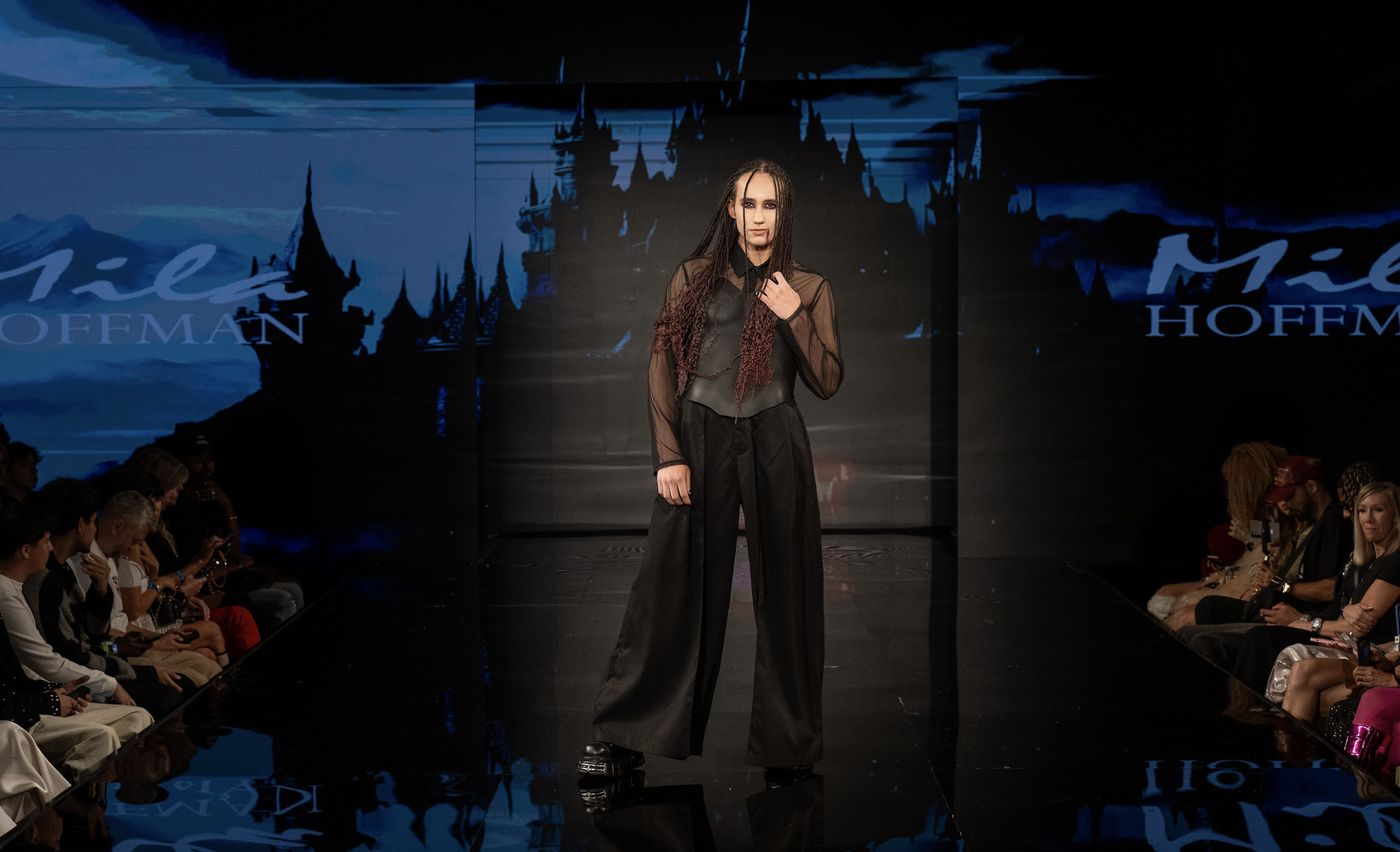
Fashion by Mila Hoffman
Lesson 3: Culture Is Not a Partnership, It Is the Medium
Brands often treat pop culture as something you rent. A celebrity cameo, a soundtrack, a sponsored post. Fashion week treats culture as the base layer. It is not decoration.
This is where Art Hearts Fashion’s designer mix is especially instructive. It is not one aesthetic trying to win. It is multiple cultural lanes sharing the same stage.
Kentaro is a clean example of how fashion and music can collapse into one singular language. His background as a pianist and composer is not just biography. It is methodology. He thinks in crescendos and pacing and that is why his runway work reads like performance rather than display. Brands should pay attention because most brand campaigns still look like product catalogs in motion. A true cultural campaign has rhythm. It has restraint. It knows when to hold and when to hit with a message of meaning.
Even CM Equestrian tells you something important. Equestrian style has drifted into the broader fashion bloodstream because it carries an instantly recognizable promise: discipline, polish, competence and elegance. It is a lifestyle code. If you are a brand, you should stop asking, “What is trending?” and start asking, “What does this aesthetic signal socially?” That is how fashion moves -- it moves through meaning, not novelty.
Fashion by Diyanni Yatch Club
Lesson 4: Own Your Niche So Strongly It Becomes Mainstream
The most modern form of brand power is not “for everyone.” It is “for my people.” That is what converts.
This is why Anthony Rubio is not a gimmick. Pet couture sounds like internet chaos until you realize it is a perfect synthesis of where culture is now: pets as family, pets as celebrities, pets as content engines, and fashion as the most efficient visual amplifier of all of that. Rubio’s work shows how niche becomes mass when the niche is emotionally central. Brands should remember that the internet rewards specificity. Trying to be universally appealing is how you become invisible.
Similarly, designers like AlycesaundraL and Wanda Beauchampsit inside a different lane, where runway intersects with pageantry, youth fashion, and the performance economy. It is easy to dismiss that lane if you are stuck in old hierarchies of taste. It is also a mistake. Those segments understand something brands forget: people do not buy products. They buy moments -- they buy a feeling. They buy the outfit for the photo, the event, the memory. That is commerce. That is culture. That is marketing.
Lesson 5: Influence Is Not Just Distribution, It Is Interpretation
Influencers do not merely “share” fashion. They translate it. They make it wearable, copyable, and socially safe.
Art Hearts Fashion is structured in a way that naturally feeds that translation layer. It is energetic, social, and camera-aware. It creates the kinds of moments that move from runway to to outfit rebranding without needing an editorial intermediary. In a world where attention is fragmented, that is not shallow. It is strategic.
Brands should learn to design for interpretation and ownership. Build campaigns that invite remixing and interpretation. Make your visual codes clear enough that other people can wear them confidently -- without your permission.
What This Means for Brands
Paris teaches brands how to build myth and mystique. New York teaches brands how to build momentum and moxie. Platforms like Art Hearts Fashion shows what happens when you treat the runway as a living media platform rather than a locked-door institution.
The practical conclusion is simple. Brands win when they can do three things at once.
- They create a signature surface that is instantly recognizable.
- They stage experiences that people crave to attend and feel FOMO if they miss it.
- They embed themselves in culture through rhythm, not randomness.
High fashion is often dismissed as fantasy. In reality, it is one of the most rigorous branding systems out there. It just happens to be made of fabric, music cues, lighting, and the hard work of making meaning look effortless. As brands fight for relevance in a world of infinite scrolling, Fashion Week is the reminder that attention isn’t won by shouting louder—it’s won by building a world people want to step into. Paris teaches permanence. Milan proves craft. New York turns it into culture at speed. And platforms like Art Hearts Fashion show the next evolution: runway as media, community as momentum, and storytelling as the real product. The takeaway is simple. If you want to move people, do not just market features. You need to stage meaning and make it wearable.
Ultimately, brands need to be unforgettable not for what they claim, but for what they unlock—the feeling that the consumer is sharper, bolder, and simply unstoppable.
New York Fashion kicks off this week! To attend the runway shows, visit Arts Hearts Fashion.
Posted at MediaVillage through the Thought Leadership self-publishing platform.
Click the social buttons to share this story with colleagues and friends.
The opinions expressed here are the author's views and do not necessarily represent the views of